
What Is the Ideal Reverberation Time for a Restaurant or Café?

What Is the Ideal Reverberation Time for a Restaurant or Café?
The ideal reverberation time for a restaurant or café is roughly 0.6–1.0 seconds, tightening toward 0.6 seconds in smaller rooms. That range is long enough to keep a dining room feeling lively rather than sterile, but short enough that guests at a table can hear each other without raising their voices. Most modern, hard-surfaced restaurants measure well above it — often 1.2 to 2.0+ seconds — which is why so many new-build dining rooms feel loud from the moment they open.
If you manage, design, or own a restaurant, café, or bar, you have almost certainly heard a version of the complaint “we love the food but it’s just too loud in there.” That complaint is rarely about the kitchen or the music playlist — it’s about reverberation time, the physical property of the room itself. This guide explains what the target RT60 actually is for dining spaces, why it sits where it does, how it connects to the decibel levels guests actually experience, what drives most rooms above target, and what a properly sequenced fix looks like.
What Is the Target Reverberation Time for a Restaurant?
Reverberation time (RT60) is the time it takes for a sound to decay by 60 dB after its source stops — the full technical explanation, with the underlying Sabine formula, is in our reverberation time (RT60) guide. For dining spaces specifically, the accepted design range is:
- Target: 0.6–1.0 seconds.
- Small cafés and intimate dining rooms: aim nearer the bottom of that range, around 0.6 seconds — a small volume with a long decay reads as disproportionately harsh because reflections arrive close together in time.
- Larger dining halls and open-plan restaurants: the upper part of the range, up to about 1.0 second, is acceptable and can even help a large room feel fuller and more social when only partly occupied.
This sits deliberately between the tight target for pure-speech rooms — private offices and meeting rooms want 0.4–0.7 seconds — and the long, warm decay a concert hall wants for music (1.2–2.0 seconds). A restaurant needs some of both: enough liveliness to feel social and energetic, not a dead, library-quiet room, but short enough that conversational speech across a table of four stays intelligible over ambient chatter, music, and service noise. Getting this balance right is really the entire brief of restaurant acoustics as a discipline.
Why Does a Dining Room Need This Specific Range?
It’s a Speech Room Wearing a Music Room’s Clothes
Most rooms have one dominant job — a classroom needs consonants to survive across the room, a concert hall needs a note to bloom and blend. A restaurant has to do both, simultaneously, for dozens of independent conversations happening at once. Every table is its own little “meeting room,” and every table is also part of the ambient soundscape that gives the venue its atmosphere. RT60 in the 0.6–1.0 second window is the compromise that lets both jobs happen at the same time — see our companion piece on what actually makes a room feel “atmospheric” vs. simply loud for more on that balance.
Reverberation Feeds the Noise Floor, Which Feeds the Lombard Effect
This is the mechanism that turns a merely lively room into an genuinely uncomfortable one, and it’s worth understanding in full because it explains why restaurant noise escalates rather than staying flat through a service period.
- A room with a long RT60 doesn’t just let individual voices ring — it lets reflected energy from every conversation, plate clatter, and music note pile up on top of direct sound, raising the room’s overall background noise level.
- As the background rises, guests at each table have to speak louder to be heard over it by their own table-mates.
- Everyone doing this simultaneously raises the average level further still — this unconscious behavior, where people involuntarily increase vocal effort in response to background noise, is called the Lombard effect.
- The cycle repeats through a busy service, and a room that measured a comfortable 65 dB(A) at the start of the evening can climb into the mid-80s by the peak of service — not because any one thing got louder, but because the room’s own reverberant tail kept compounding on itself.
A shorter, well-controlled RT60 breaks this loop early: reflected energy decays fast enough that it doesn’t meaningfully add to the next moment’s noise floor, so speech stays at a normal conversational level even in a full room.
How Reverberation Time Connects to the Decibel Levels Guests Actually Feel
Reverberation time is the cause; sound pressure level is the symptom guests actually notice and complain about. In our site surveys, we typically see dining spaces move through a fairly predictable band as the room fills:
| Service state | Typical SPL | What it feels like |
|---|---|---|
| Off-peak / near-empty | 45–60 dB(A) | Comfortable, easy conversation, feels calm to some guests, “dead” to others if RT60 is very short |
| Moderate service | 65–75 dB(A) | Lively, normal restaurant energy — the sweet spot most operators want |
| Peak service (untreated room) | 75–85 dB(A) | Guests must raise their voices to be heard; Lombard effect is actively running; this is where complaints start |
Above roughly 80 dB(A), most people can no longer hold a relaxed conversation without leaning in or repeating themselves — and a room with an untreated RT60 well above the 0.6–1.0 second target is what pushes peak service into that 75–85 dB(A) zone in the first place. A room with the same table count and the same amount of background music, but with RT60 properly controlled, will run several decibels lower at peak simply because the reflected energy isn’t compounding.
Why Modern Restaurant Interiors Overshoot the Target
This comes straight back to the Sabine formula covered in our RT60 explainer: RT60 = 0.161 × V / A, where V is room volume and A is total absorption. Reverberation time rises with volume and falls as absorption increases — and current restaurant design trends push hard on both sides of that equation in the wrong direction:
- Open, tall volumes. Double-height ceilings, open kitchens, and knocked-through dining rooms increase V without adding proportional absorption.
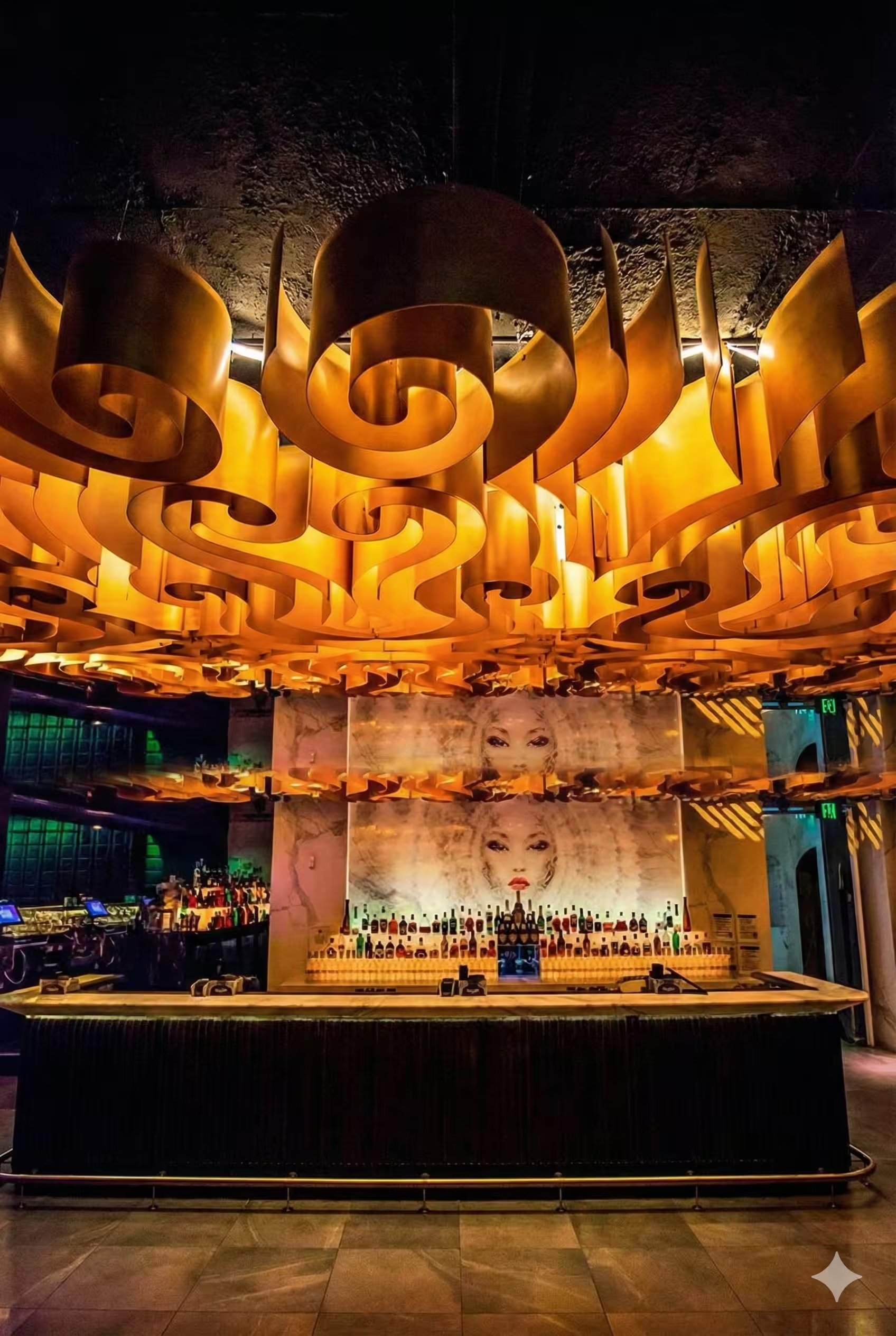
- Hard, reflective finishes throughout. Polished concrete and exposed screed floors, glass partitions and shopfronts, tile and subway-tile walls, exposed structural ceilings (or worse, exposed metal deck ceilings) — every one of these surfaces has a near-zero absorption coefficient. In Sabine terms, they contribute almost nothing to A no matter how large their surface area.
- Minimal soft furnishing by design choice. Banquette upholstery, heavy drapery, carpet, and tablecloths are all meaningful absorbers, and many contemporary restaurant aesthetics deliberately minimize all of them in favor of a stripped-back, industrial look.
- High occupant density with amplified music on top. More covers per square meter means more simultaneous conversations and clatter; background music raises the baseline further, and staff and guests both then talk louder to compete with it.
Put those four factors together and it’s common for a stylish, newly built restaurant to measure an RT60 of 1.3–2.0+ seconds — double the top of the 0.6–1.0 second target — purely as a byproduct of the finish schedule, with nobody involved in the design having made an explicit acoustic decision at all. For the deeper mechanics of why ceiling and wall choices matter so much here, see ceiling vs. wall acoustic treatment.
What “Good” Feels Like vs. “Buzzy”
Operators sometimes worry that treating a room’s acoustics will make it feel flat or “dead,” so it’s worth describing the difference in plain terms:
- A room at target (0.6–1.0 s): you can hold a normal conversation across a four-top without leaning in; background chatter reads as pleasant ambiance rather than a wall of noise; individual sounds — a laugh, a glass clinking, a server’s greeting — are distinct rather than blurred together; the room still feels social and energetic, not silent.
- A room above target (“buzzy”): conversations require raised voices within 20–30 minutes of the room filling; guests at the far end of a table have to repeat themselves; the overall sound reads as an undifferentiated roar rather than distinct voices; by the end of peak service, everyone — guests and staff — is talking louder than they intended to.
- A room well below target (“dead”): genuinely rare in restaurants (it’s an over-treatment problem, more common in recording studios), but a room with almost no reverberation can feel sterile, clinical, and oddly quiet in a way that undercuts the social atmosphere guests actually want from dining out.
The goal is not silence — it’s controlled liveliness, and that’s exactly what the 0.6–1.0 second range is calibrated to deliver.
Reverberation Time Targets by Dining Room Type
Not every dining space is the same shape or scale, and the practical starting point (and typical gap to close) differs meaningfully by venue type. This is the reference table we use when scoping a new project:
| Room type | Target RT60 | Typical untreated RT60 | Main fix |
|---|---|---|---|
| Small café / coffee shop | ~0.6 s | 1.0–1.5 s | Ceiling absorption (baffles or acoustic tiles) plus soft seating |
| Mid-size bistro / casual dining | 0.6–0.8 s | 1.2–1.8 s | Ceiling-first absorption, supplemented by wall panels near hard perimeter surfaces |
| Large dining hall / banquet room | 0.8–1.0 s | 1.5–2.5+ s | Substantial ceiling absorption (rafts/clouds), zoning of the loudest areas, wall treatment on parallel hard walls |
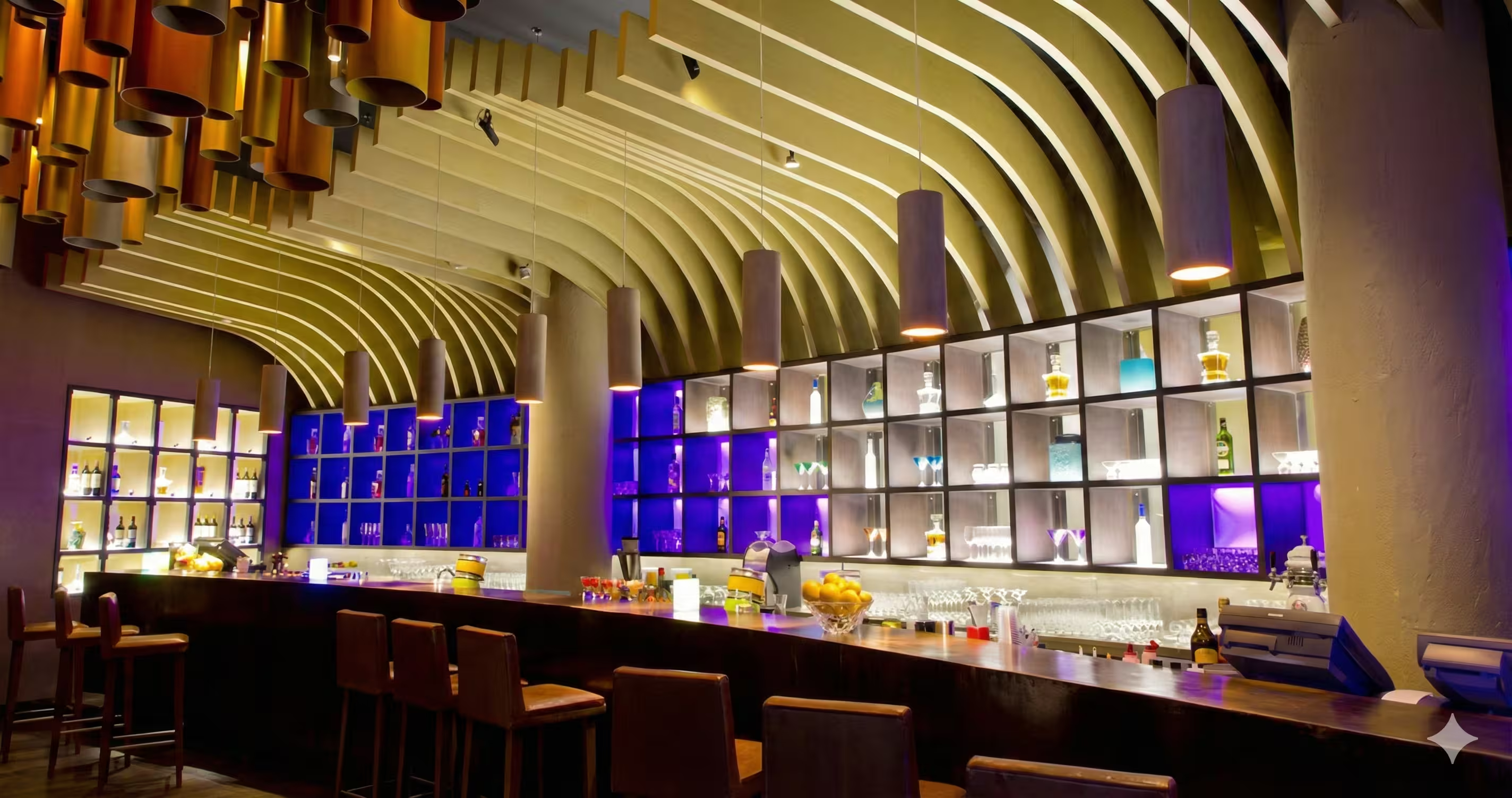
| Bar / lounge area | 0.7–1.0 s (leans toward the livelier end) | 1.5–2.0+ s | Ceiling and upper-wall absorption balanced against wanting some liveliness for atmosphere and music |
A few patterns worth calling out from this table: the untreated gap is almost always in the ceiling and wall finishes, not the floor — most dining rooms already have some floor absorption from carpet runners, rugs, or simply from being occupied by chairs and diners. And bar areas deliberately target the top of the range rather than the bottom, because a completely dead bar can feel awkward and over-quiet in a way that undercuts the social energy the space is meant to have — this is a case where a little extra reverberation is a design choice, not a defect.
The Business Case: Noise Is the Restaurant Industry’s #1 Complaint
This isn’t a theoretical acoustics problem — it shows up directly in revenue and reviews. A few figures worth knowing if you’re building the case internally for treating a dining room:
- Noise consistently ranks as the #1 diner complaint in Zagat’s long-running surveys — ahead of service and ahead of food quality. Guests will forgive a slow table turn or an average dish more readily than they’ll forgive not being able to hear the person across from them.
- Roughly 80% of diners in UK surveys report having left a venue early, or decided not to return, because of noise. That is a direct, measurable hit to repeat visits and average spend per visit — not a soft, unquantifiable “ambiance” issue.
- Excessive noise measurably dulls taste perception. Research on background noise and flavor perception has repeatedly found that loud environments suppress the perceived sweetness and overall flavor intensity of food — meaning a too-loud room isn’t just uncomfortable, it can actively undercut how good the kitchen’s food tastes to the people eating it.
Put together, this makes reverberation time one of the very few acoustic metrics with a direct, well-documented line to covers, dwell time, and repeat business — not just comfort. For a deeper look at the mechanics of noise buildup during service and how to bring it back down, see how to reduce restaurant noise.
How to Fix a Dining Room That’s Above Its RT60 Target
Because RT60 falls as absorption rises (per Sabine), fixing an over-reverberant dining room is a surface-area and material problem, tackled in a specific order:
- Measure first. Establish the room’s actual current RT60 per frequency band — not a guess based on how loud it “feels” — so the treatment plan is sized to the real gap rather than over- or under-specified. See how acoustic measurement is performed for the field methodology.
- Treat the ceiling first. In the overwhelming majority of dining rooms, the ceiling is the largest unobstructed surface and the highest-impact place to add absorption — acoustic tiles, baffles, or a suspended cloud sized to the room’s volume and current gap. It also avoids competing with wall finishes, artwork, or banquette upholstery that are part of the room’s design identity.
- Add wall treatment where the ceiling alone doesn’t close the gap — particularly on large, parallel hard walls (common cause of flutter echo) or where a specific low-frequency buildup needs targeted absorption.
- Zone the loudest areas away from quiet dining. Open kitchens, bar service areas, and expo stations generate impulsive, high-level noise (plates, ice, blenders, shouted orders) that reverberation control alone can’t fully soften — physical separation or acoustic screening between these zones and seated dining tables reduces the load on the rest of the room’s treatment.
- Manage music level as a variable, not a constant. Background music contributes directly to the noise floor that drives the Lombard effect; even a well-treated room can be pushed back toward the “buzzy” end if music volume climbs unchecked through the evening.
- Re-measure post-installation. Confirm the finished, furnished, and reasonably occupied room actually lands in the 0.6–1.0 second target — not just that panels were hung.
This is the same “ceiling-first, then walls” sequencing we use across most room types, and we explain the underlying logic — including when walls should actually come first instead — in ceiling vs. wall acoustic treatment.
Reverberation Time vs. Soundproofing: A Common Confusion
Restaurant operators frequently come to us asking to “soundproof” a dining room, when what they actually mean is that the room itself sounds too loud and chaotic while guests are seated in it — that’s a reverberation problem, not a soundproofing one. The distinction matters for budgeting and expectations:
- Reverberation time / absorption governs how sound behaves inside the dining room — how long it rings, how quickly conversation-level noise builds during service. This is what acoustic ceiling and wall treatment fixes, and it’s the subject of this entire article.
- Soundproofing / sound insulation governs how much sound transfers between rooms — for example, kitchen noise reaching a private dining room next door, or restaurant noise disturbing residential units upstairs. That’s a mass, sealing, and isolation problem (measured in STC/Rw), covered separately under sound insulation solutions.
A dining room can have excellent reverberation control and still transmit kitchen clatter loudly to an adjacent space through a shared wall — and conversely, a perfectly sound-isolated dining room can still be an unbearably loud, buzzy mess to sit in. We cover this distinction in full, with examples from both sides, in sound absorption vs. soundproofing — worth reading before scoping any project so the budget goes to the actual problem.
How This Differs for Cafés Specifically
Cafés deserve a specific note because they skew toward the tighter end of the target range (around 0.6 seconds) for reasons distinct from full-service restaurants: smaller floor areas concentrate reflections over shorter distances, laptop and study users are more sensitive to background noise than diners expecting some ambient buzz, and the espresso machine, grinder, and steam wand are all high-level, high-frequency noise sources that a long RT60 will smear across the entire room rather than letting decay quickly near the counter. We go into café-specific treatment priorities — including counter-area zoning and the trade-off between “cozy” acoustics and pure noise reduction — in café acoustics: atmosphere and comfort and on our café acoustics service page.
Measuring and Rating the Materials Used to Get There
Once the target RT60 and the room’s current gap are established, the actual material selection comes down to each product’s absorption performance — most commonly summarized by its NRC (Noise Reduction Coefficient), a single 0–1 number averaged across four mid-range frequencies and tested to ASTM C423. NRC is a useful comparison figure but a coarse one — it says nothing about how a material performs at the low frequencies where kitchen equipment and bass-heavy background music sit. We explain the calculation, its limits, and the finer per-frequency sound absorption coefficient (α) it’s derived from in NRC vs. the sound absorption coefficient — essential reading once you move from “we need treatment” to actually specifying products.
Request a Reverberation Time Measurement for Your Dining Room
If your restaurant, bistro, or café is getting the “great food, too loud” comment more often than you’d like, the fastest way to find out how far your room sits from the 0.6–1.0 second target — and exactly what it would take to close that gap — is a measured on-site reading rather than a guess. Our team carries out a full acoustic survey of the dining room, measures RT60 per frequency band during a realistic occupied or simulated-occupied state, and designs a ceiling-first treatment plan sized to your actual room, not a generic panel package. Request a site survey or acoustic measurement and we’ll show you exactly where your room sits against target and what closing the gap involves.
FAQ
What is the ideal reverberation time for a restaurant?
The target is roughly 0.6–1.0 seconds, with smaller cafés and intimate dining rooms aiming closer to 0.6 seconds and larger dining halls able to sit toward 1.0 second. This range balances a lively, social atmosphere against guests being able to hold a normal conversation without raising their voices.
Why do so many new restaurants sound too loud?
Most modern restaurant interiors combine large open volumes with hard, reflective finishes — polished concrete, glass, tile, exposed ceilings — and minimal soft furnishing, which pushes RT60 well above the 0.6–1.0 second target, often into the 1.3–2.0+ second range. Per the Sabine formula, reverberation time rises with room volume and falls with absorption, and these design trends work against absorption on almost every surface at once.
How does reverberation time relate to how loud a restaurant actually feels?
Reverberation time is the underlying cause; sound pressure level is the symptom guests notice. A long RT60 lets reflected sound from every conversation and clatter pile onto the room’s noise floor, which pushes guests to talk louder to be heard (the Lombard effect), which raises the floor further still — turning a moderate 65–75 dB(A) service into a peak-service 75–85 dB(A) roar in an untreated room.
What’s the single most effective fix for an overly reverberant dining room?
In the large majority of cases, ceiling absorption — acoustic tiles, baffles, or a suspended cloud — delivers the biggest improvement, because the ceiling is usually the largest unobstructed surface and isn’t competing with the room’s design finishes the way walls often are. Wall treatment is typically added afterward if the ceiling alone doesn’t close the gap.
Is treating reverberation the same as soundproofing a restaurant?
No. Reverberation treatment controls how sound behaves inside the dining room (how long it rings, how loud it gets during service) using absorptive materials on the ceiling and walls. Soundproofing controls how much sound transfers between rooms — kitchen noise into a private dining room, or restaurant noise into a residential unit above — using mass, sealing, and isolation. A room can excel at one and fail at the other; they require different diagnoses and different budgets.
Does background music make the reverberation problem worse?
Yes. Music adds directly to a room’s overall noise floor, and in a room with a long, uncontrolled RT60 that added energy compounds with reflected speech and clatter, pushing the Lombard effect further and faster. Properly controlled RT60 doesn’t eliminate this effect, but it substantially reduces how much the room’s own acoustics amplify it on top of whatever music level is playing.
Designing silence for real spaces.
Offices, hotels, restaurants, schools and healthcare — measured acoustic solutions, delivered end to end.