

Radio Room Acoustics
Radio room acoustics is the complete set of acoustic treatment and, when needed, sound insulation works carried out so that announcer voices and guest conversations are heard clearly, smoothly, and professionally. Proper acoustics reduces reverberation, minimizes the effect of external noise, and lowers the sense of “room tone” during broadcasting, giving listeners a higher-quality experience.
What Is Radio Room Acoustics?
Radio room acoustics controls reverberation and reflection problems in order to improve speech intelligibility in a broadcast environment. Reflected sound returning from wall and ceiling surfaces in an announcer booth can leak into the microphone as “room tone.” With properly positioned acoustic panels, ceiling solutions, and complementary materials, broadcasts become cleaner and more balanced.
Advantages for Broadcast Quality
- Clear Speech: Reverberation and reflections are reduced, making words easier to understand.
- Less Room Tone: The microphone captures the voice, not the room, so the broadcast sounds more professional.
- Lower External Noise Impact: With suitable solutions, outside sounds are minimized from leaking into the broadcast.
- Comfortable Broadcasting: A less tiring and more controlled sound environment during long broadcasts.
- Corporate Image: Cleaner sound means a stronger brand perception.
- Project-Specific Planning: Optimized according to room size, usage scenario, and budget.
Application Areas
- Radio Broadcast Studios: Announcer rooms, guest rooms, live broadcast areas.
- Podcast / Content Production: Speech-focused recording areas and voice-over studios.
- News & Announcement Rooms: Internal announcement spaces and media rooms.
- Home Broadcast: Acoustic improvement for creators broadcasting from home.
- Recording & Production: All areas where speech recordings need to be captured cleanly.
Clean Sound in the Announcer Booth: Control Reverberation, Strengthen the Broadcast
In radio rooms, the goal is not to make sound quieter, but to control it. In speech-focused broadcasts, even small reflections can leak into the microphone and make the sound thin, harsh, or muddy. Han Acoustic provides acoustic treatment solutions for radio rooms with the goals of preventing reverberation, reducing noise impact, and achieving accurate sound.
Radio room acoustics solutions are critically important for ensuring that broadcast sound is clear and professional. Properly planned acoustic applications reduce reverberation, increase speech intelligibility, and help achieve a smoother broadcast sound.
Depending on the project, solutions such as acoustic fabric panels, acoustic ceiling panels, acoustic foams, acoustic curtains, and acoustic carpets can be planned together. In addition, the system can be supported with suitable sound insulation materials to reduce the effect of external noise.
Share your room dimensions and usage type, whether live broadcast, recording, or podcasting, and we will quickly outline the most accurate solution combination.
Reverberation and Reflection Control
In speech-focused broadcasts, the most important issue is reflection control. With properly placed panels on wall and ceiling surfaces, early reflections are reduced and the announcer’s voice sounds warmer and more intelligible.
Reducing the Effect of External Noise
Traffic, building noise, or other external sound sources can leak into the broadcast. Acoustic treatment can be supported with proper sound insulation layers when needed, making the broadcast environment more stable.
Radio Room Acoustics Application Process
We quickly analyze your room, determine the right material combination for your broadcast goals, and complete the application professionally.
Needs Analysis
The room size, broadcast type, whether live or recorded, microphone layout, and existing problems such as reverberation and external noise are evaluated.
Acoustic Planning
Reflection surfaces and ceiling areas are identified, and a targeted improvement plan is prepared for speech clarity.
Material Selection
Acoustic panels, ceiling solutions, and complementary products such as curtains, carpets, and foams are planned according to project needs.
Application
Wall and ceiling applications are completed with proper placement, targeting both aesthetics and performance together.
Control & Delivery
Placement checks are completed and the room is delivered with the goal of ideal acoustic comfort for broadcasting.


What Should Be Considered When Planning Acoustics in a Radio Room?
Because radio rooms are speech-focused, the goal is to increase intelligibility and reduce reflections entering the microphone. Instead of placing panels randomly, announcer and microphone position, reflection surfaces, and the ceiling area should all be considered together.
Han Acoustic designs acoustic treatment solutions to improve broadcast quality in radio rooms and, when needed, completes the system with solutions that reduce the effect of external noise. This provides listeners with a cleaner broadcast sound.
Send your room dimensions and broadcast setup, and we will quickly outline the best solution combination for you.
Frequently Asked Questions and Contact
We have compiled the most frequently asked questions about radio room acoustics. If you have a specific question for your project, you can fill out the form.
Why is radio room acoustics so important?
For broadcast sound to be heard cleanly, reverberation and reflections must not leak into the microphone. Proper acoustic treatment improves speech clarity and raises broadcast quality.
Are acoustic treatment and sound insulation the same thing?
No. Acoustic treatment controls internal reverberation and room response, while sound insulation reduces outside noise entering the room and sound escaping from it. In radio rooms, both can be planned together when needed.
Which materials are used?
Depending on the project, solutions such as acoustic fabric panels, acoustic ceiling panels, acoustic foams, acoustic curtains, and acoustic carpets can be combined together.
Does it also work in a small announcer booth?
Yes. In small volumes, reflections build up faster, and acoustic treatment with correct placement significantly reduces the room tone leaking into the microphone.
How long does the application take?
It depends on room size and the scope of the solution. Most radio room projects can be completed in a short time thanks to fast planning and application مراحل.
New content, tips and practical guides.
Tips, guides, and application examples about acoustics and sound insulation.
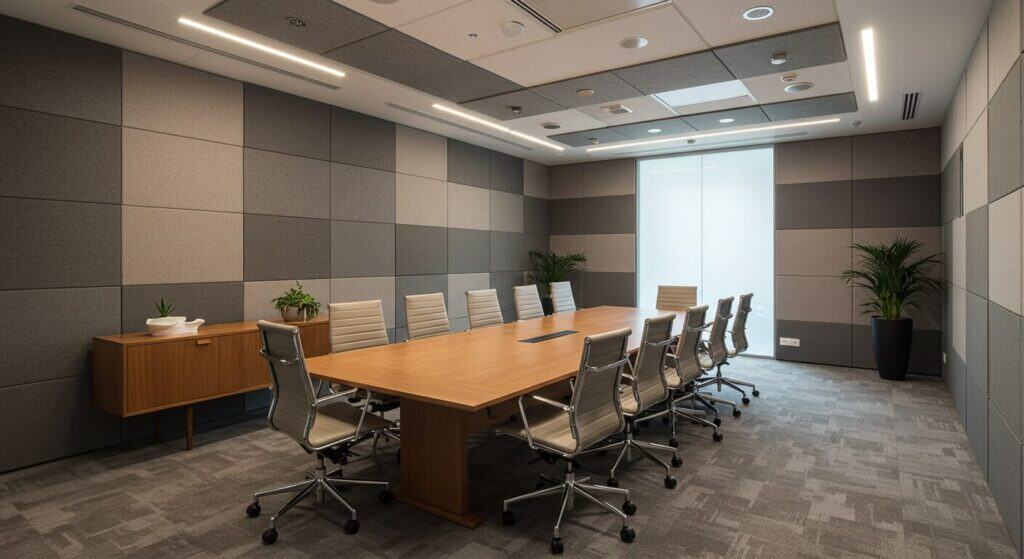
Most Commonly Used Acoustic Solution Types
Acoustic Fabric Panels Highly effective in speech clarity and mid-to-high frequency control. Acoustic Felt Panels Offers both aesthetic and practical application advantages; widely preferred…
Read More →
How to Choose the Right Solution for Your Space?
1) Clarify the need: “What’s the problem?” First, identify the problem correctly: Are conversations hard to understand? (echo/ringing) Is sound coming from the floor…
Read More →
What Is Acoustic Design? How to Choose the Right Solution for Your Space?
When a space has a “sound problem,” most people look for a single solution: “Let’s install this and we’re done.” But in reality, good…
Read More →