

Fabric-Covered Acoustic Felt Panels
Fabric-covered acoustic felt panels are decorative solutions preferred to provide acoustic comfort in interiors and help reduce the perception of echo/noise. The sound-absorbing character of felt material is supported by fabric covering to contribute to a more balanced sound environment. Also, it completes modern and elegant decorations with wide color and fabric texture alternatives; space-specific customization options can be offered according to the project.
What Is a Fabric-Covered Acoustic Felt Panel?
Fabric-covered acoustic felt panel is an acoustic treatment panel that combines the sound-absorbing structure of the felt core with an aesthetic and protective fabric surface.
Fabric covering provides both decorative variety and supports surface durability in high-traffic areas. With correct coverage and placement, especially in spaces with intensive conversation, it can contribute to speech intelligibility.
What Are the Advantages?
- Superior Acoustic Comfort: The felt structure, together with the fabric surface, helps reduce reflections.
- Durable Surface: Fabric covering makes the panel surface more protected in high-traffic areas.
- Decorative Variety: Wide color range, different fabric textures and optional patterned choices.
- Modern Look: Elegant and professional finish; creates premium perception in corporate areas.
- Sustainable Material: Recycled eco-friendly PET felt approach.
- Customization: Design flexibility with space-specific size / cut / pattern options.
Applications
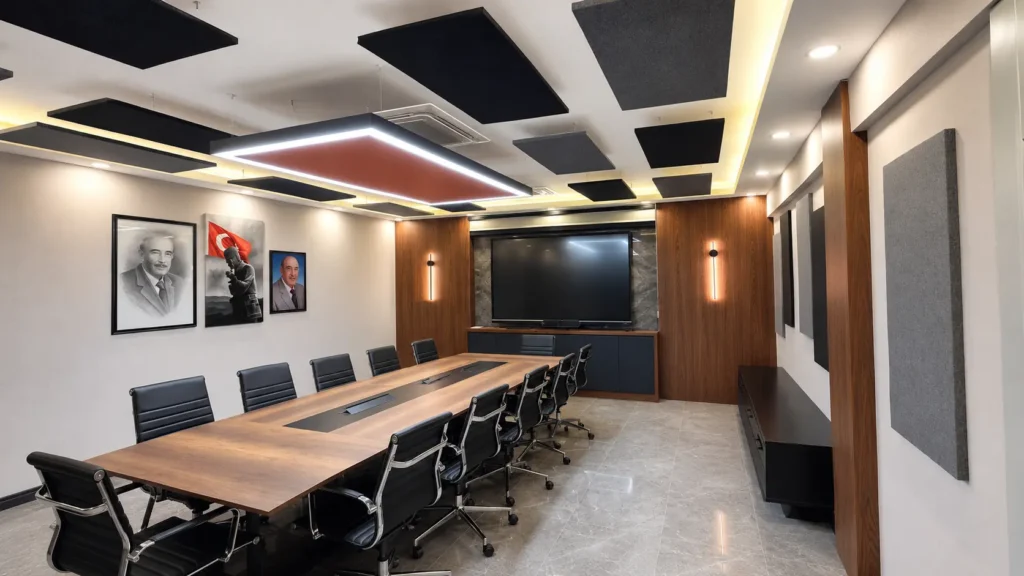
- Offices: Open office, meeting room, executive office, call center.
- Educational Institutions: Classrooms, study halls, libraries, seminar rooms.
- Hotels: Acoustic comfort in lobbies, corridors, and common areas.
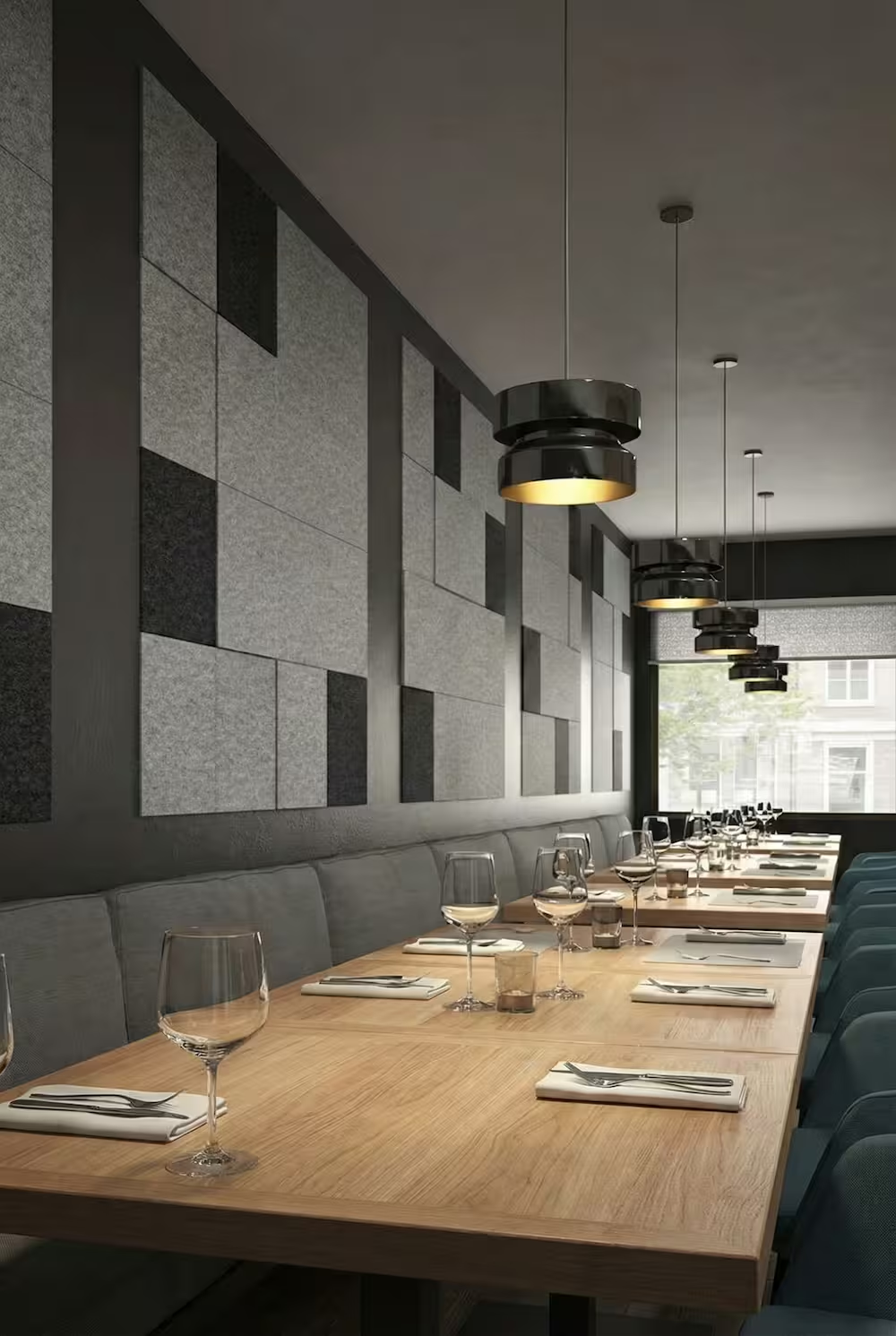
- Restaurants & Cafes: More comfortable customer experience with noise control.
- Conference Halls & Theaters: Clearer speech and balanced sound environment.
- Studios & Recording Rooms: Echo control and cleaner sound atmosphere.
Aesthetic with Fabric Texture, Acoustic Performance with Felt
Fabric-covered acoustic felt panels appear as part of the decoration while helping reduce the “lengthening” of sound in interiors. The felt core supports the damping of sound waves, while the fabric surface offers both design variety and improved durability in use.
Fabric-covered acoustic felt panel is a modern solution preferred especially in applications such as open office acoustics, meeting room echo reduction and restaurant noise control. The felt + fabric combination helps reduce reflections from hard surfaces, contributing to a more balanced sound environment.
Thanks to its wide color and texture alternatives, it adapts to corporate identity and interior concepts. Optional patterned fabric choices can add a dynamic and eye-catching character to the decoration.
As a material, recycled eco-friendly PET felt is used. With space-specific customization options (size/cut/detail) according to the project, acoustic goals can be approached while preserving the architectural line.
Superior Acoustic Performance
The sound-absorbing properties of felt material are supported by fabric covering, helping reduce the “harsh” spread of sound waves within the space. The fabric surface offers an advantage especially for projects targeting a more comfortable acoustic experience in high-traffic areas or environments where echo must be minimized.
Decorative Variety and Color Options
Fabric-covered acoustic felt panels offer flexibility to designers with a wide range of colors and different fabric textures. They adapt to different interior styles, from neutral tones to vibrant colors; optional patterned fabric choices can create eye-catching details in decoration.
Acoustic Fabric Color Swatch
You can review the fabric swatch below to make it easier to choose the right color for your project.
Installation and Assembly Process
At Han Acoustic, we ensure structured project management every step of the way: careful needs analysis, the right design selection, and clean workmanship.
Needs Analysis & Area Assessment
We identify surfaces with high levels of echo and reverberation and plan target areas and required square footage.
Fabric Color & Texture Selection
The color palette, fabric texture, and optional pattern choices are clarified; harmony with the concept is ensured.
Sizing & Customization
Measurements suitable for the application surface are taken; production drawings are prepared with dimensions and details specific to the environment.
Production & Quality Control
PET felt + fabric covering production is carried out; surface, stitching/covering, and overall quality are checked.
Installation & Delivery
Installation is carried out with the appropriate method for the project; handed over after visual alignment and general quality check.

What to Consider When Choosing a Fabric-Covered Acoustic Felt Panel?
The most critical issue is to target the right surface and create a layout plan that fits the need. Instead of covering every surface completely, building a balanced distribution in the areas where sound reflects the most yields more efficient results.
On the fabric covering side, color, texture, and durability/cleaning criteria should be considered together according to the usage scenario. This way, both visual integrity and functional purpose are met at the same time.
Send a sample image and approximate m² information for fabric type and color selection; we will guide you quickly.
FAQs and Contact
We have compiled the most frequently asked questions about fabric-covered acoustic felt panels. If you have a specific question for your project, you can fill out the form.
What is a fabric-covered acoustic felt panel?
Fabric-covered acoustic felt panels are decorative acoustic treatment panels that combine the sound-absorbing structure of the felt core with an aesthetic and protective fabric surface.
What are the fabric and color options?
A wide range of colors and different fabric textures are available. Optional patterned fabric choices can add a more dynamic character to the decoration.
What is the acoustic benefit?
The felt + fabric surface combination helps reduce reflections from hard surfaces. With the right coverage and correct placement, it can support speech intelligibility and help reduce the sense of reverberation.
Does it provide sound insulation?
These products are mainly for acoustic treatment (echo control). Complete sound isolation requires layered wall/ceiling systems with heavy barriers. However, by reducing echo, they significantly improve interior comfort.
Where is it used?
It is preferred in many areas such as offices, educational institutions, hotels, restaurants/cafes, conference halls, theaters, studios, and recording rooms.
What is the material, is it sustainable?
The panels use recycled eco-friendly PET felt. Thanks to their long-lasting structure, they offer advantages for projects with a sustainability approach.
Can custom sizes or designs be made?
Yes. Depending on the project, space-specific customization options such as size, cut, and fabric/pattern can be offered.
How is the installation done?
The application method varies depending on project details. After suitable surface preparation, it can be applied using methods such as adhesive bonding or mechanical fixing; professional installation support can be provided.
How is cleaning and maintenance?
For daily maintenance, dust removal is sufficient. Depending on the texture of the fabric surface, gentle cleaning with a damp cloth is recommended; abrasive chemicals should be avoided.
What determines the pricing?
Pricing varies according to total square meterage, fabric type/color, size-cut details, and installation needs. If you share the approximate m² and project image, we can prepare a quick quote.
New content, tips and practical guides.
Tips, guides, and application examples about acoustics and sound insulation.
Measured Acoustic Solution vs. Buying Panels From a Catalog: Which Actually Works?
Ordering acoustic panels online vs. a measured, engineered solution — compare diagnosis, quantity, frequency coverage, placement, and cost risk.
Read More →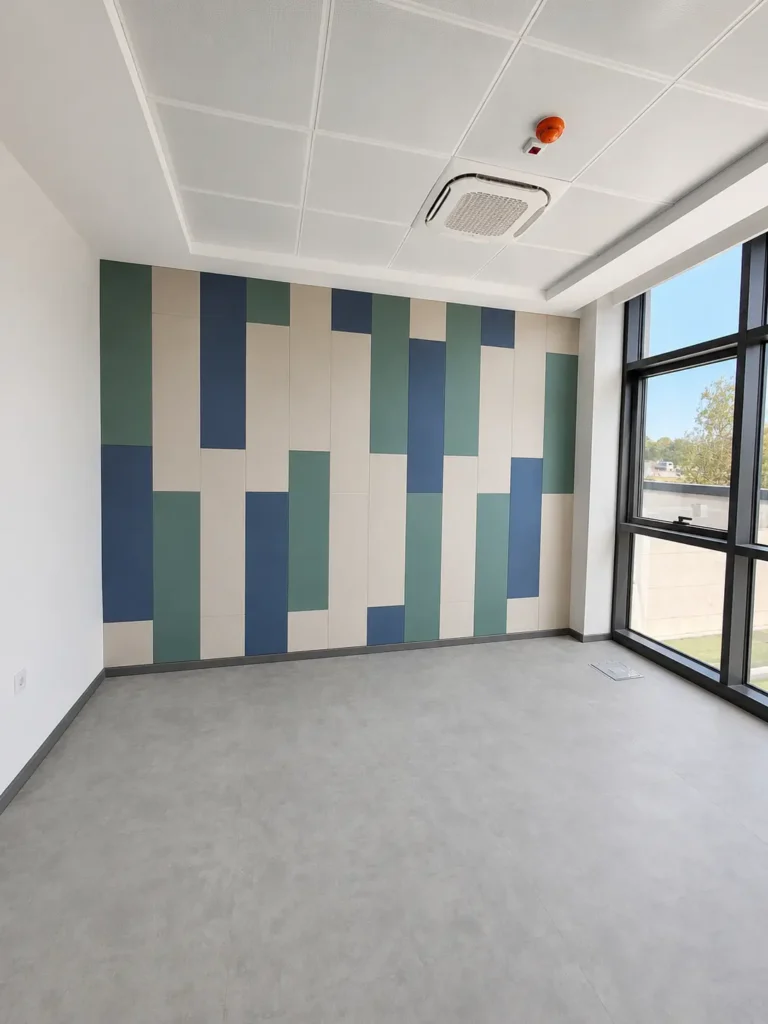
“Reading an Acoustic Report: RT60, STC, NRC and STI Explained”
A plain-English decoder for acoustic consultant reports — what RT60, STC/Rw, IIC, NRC and STI mean, what's good, and what the numbers hide.
Read More →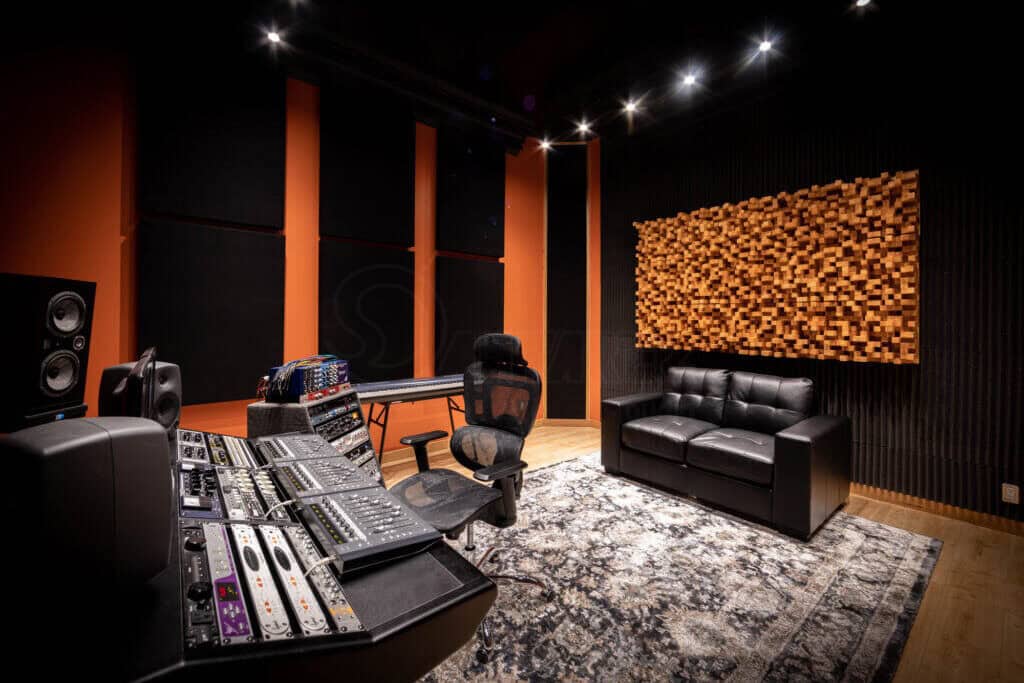
How Is an Acoustic Measurement Actually Performed? A Step-by-Step Guide
A field guide to acoustic measurement: equipment, RT60, background noise, airborne and impact insulation, and open-plan STI — step by step.
Read More →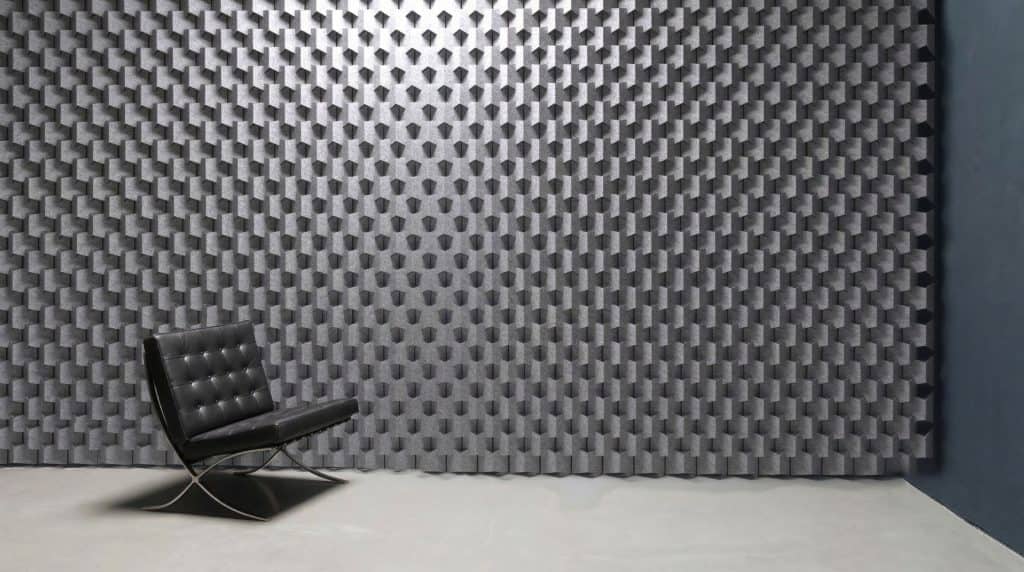
“Noisy Hospital Wards: The Hidden Cost to Patients and Staff”
Hospital wards often run at 55–70 dBA against a WHO 30 dB night guideline. Here's why, what it costs patients and staff, and how…
Read More →
Hospital and Healthcare Acoustics: Why Sound Design Affects Recovery
WHO hospital noise guidelines vs. real ward levels, the impact on sleep and healing, and how healthcare acoustics balances hygiene with quiet.
Read More →
“Auditorium and Lecture Hall Acoustics: Designing for Every Seat”
Auditorium and lecture hall acoustics explained — the speech-vs-music RT tension, even coverage, echo control, STI targets, and design process.
Read More →