

Instrument Room Acoustics
Instrument room acoustics are acoustic treatment solutions that control echo, external noise, and sound distortions that interfere with the natural tone of instruments, creating a more clear, more balanced, and more accurate listening and recording environment. Han Acoustic brings your instrument room to a professional level with acoustic panels, bass trap systems, and sound insulation materials.
What Is Instrument Room Acoustics?
Instrument room acoustics aim to reduce the way a room colors the sound during rehearsal and recording. Reflections from hard surfaces can damage the natural character of the tone, while low-frequency build-up can make bass sound swollen and uncontrolled. With correct planning, instruments are heard more accurately and recordings come out cleaner.
What Does It Improve?
- Natural Tone: Reflection-related harshness and blur are reduced, preserving instrument character.
- Clear Monitoring: Details become more noticeable during rehearsal, so performance becomes more controlled.
- Clean Recording: Room tone entering microphones is reduced, lowering post-production needs.
- Low-Frequency Control: Bass traps balance bass energy that builds up in corners.
- Reduced External Noise Impact: When needed, insulation layers minimize the effect of outside noise.
- Project-Based Solution: Optimized according to room dimensions, instrument type, and budget.
Application Areas
- Rehearsal Rooms: Controlled reverberation for dynamic instruments such as drums, guitar, and bass.
- Instrument Recording Rooms: Reflection management for capturing tone without coloration.
- Music Schools: Clear acoustic environments in classrooms and practice rooms.
- Home Studios: Targeted acoustic improvement in small spaces.
- Production Spaces: Solutions that strengthen both performance and recording quality.
Control in Rehearsal and Recording: Reduce Echo, Preserve Tone
In instrument rooms, the goal is not to silence the sound, but to control it. Echo and outside noise can affect the natural sound of instruments and make recording more difficult. Han Acoustic offers special solutions for instrument rooms to prevent echo, strengthen insulation, and, when needed, turn the room into a professional recording environment.
Instrument room acoustics aim to create an environment where instruments can be heard clearly and accurately. Properly planned applications reduce reflections, improve frequency balance, and lower the impact of outside factors on both performance and recording.
Depending on the project, acoustic fabric panels, acoustic ceiling panels, acoustic foams / bass traps, acoustic curtains, and acoustic carpets can be designed together. This improves both rehearsal comfort and recording quality at the same time.
Share the room dimensions and the instrument type such as drums, guitar, strings, or wind instruments, and we will quickly determine the most suitable solution combination.
Reflection and Echo Management
Reflections from walls and ceilings can damage the natural tone. With correctly positioned panels, early reflections are brought under control so instruments sound cleaner and more balanced.
Low-Frequency Control with Bass Traps
Low frequencies especially build up in corners and can create a boomy response. Bass trap applications reduce this accumulation and strengthen the overall balance of the room.
Instrument Room Acoustics Application Process
We analyze your room, determine the right solution combination according to the instrument type and target, and complete the implementation.
Needs Analysis
Room size, instrument type, usage such as rehearsal or recording, and existing issues such as echo, outside noise, and bass build-up are evaluated.
Acoustic Planning
Wall and ceiling reflection points plus corner regions are identified, and a plan is prepared for the targeted acoustic comfort.
Material & Combination Selection
Acoustic panels, bass traps, and complementary solutions such as curtains and carpets are configured according to project needs.
Application
Wall, ceiling, and corner treatments are installed with correct placement, targeting both aesthetics and performance.
Final Check & Delivery
Placement checks are completed and the room is delivered in line with the targeted acoustic comfort for rehearsal and recording.


What Should Be Considered When Planning Acoustics in an Instrument Room?
Instead of covering every surface, a right material for the right point approach delivers better results in instrument rooms. The instrument type such as drums, guitar, or strings, room dimensions, and reflective surfaces should all be evaluated together.
Han Acoustic offers solutions that prevent echo and strengthen insulation in instrument rooms. While acoustic panels and bass traps provide clear monitoring, optional insulation applications can be added to reduce outside noise when needed.
Send your room dimensions and which instruments you use, and we will quickly determine the most suitable solution combination.
Frequently Asked Questions and Contact
We gathered the most common questions about instrument room acoustics. If you have a specific question for your project, you can fill out the form.
What does instrument room acoustics do?
It controls echo and reflections to preserve the natural tone of instruments and provides clearer, more balanced sound during rehearsal and recording.
Are acoustic treatment and sound insulation the same thing?
No. Acoustic treatment controls echo and room response inside the room, while sound insulation reduces outside noise entering the room and sound leaking outward. In instrument rooms, both can be applied together when needed.
Why are bass traps important?
Low frequencies build up in corners and can create an inflated bass feeling. Bass traps reduce this accumulation and help produce a more balanced room response.
Which materials are used?
Depending on the project, acoustic fabric panels, acoustic ceiling panels, acoustic foams or bass traps, acoustic curtains, and acoustic carpets can be planned together.
Can it still be effective in a small room?
Yes. In small rooms, echo and bass build-up become more noticeable. With the right placement and the right combination, a clear improvement can be achieved.
New content, tips and practical guides.
Tips, guides, and application examples about acoustics and sound insulation.
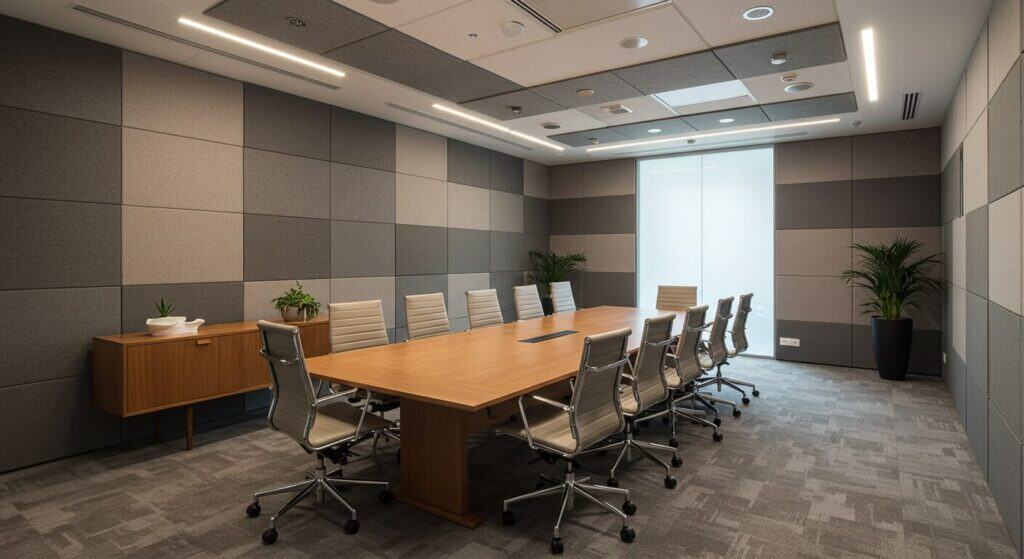
Most Commonly Used Acoustic Solution Types
Acoustic Fabric Panels Highly effective in speech clarity and mid-to-high frequency control. Acoustic Felt Panels Offers both aesthetic and practical application advantages; widely preferred…
Read More →
How to Choose the Right Solution for Your Space?
1) Clarify the need: “What’s the problem?” First, identify the problem correctly: Are conversations hard to understand? (echo/ringing) Is sound coming from the floor…
Read More →
What Is Acoustic Design? How to Choose the Right Solution for Your Space?
When a space has a “sound problem,” most people look for a single solution: “Let’s install this and we’re done.” But in reality, good…
Read More →