

Control Room Acoustics
Control room acoustics are critical for enabling audio and video teams to make decisions based on a truly accurate reference. Uncontrolled reflections, low-frequency boom, and external noise can mislead mix decisions, reduce speech clarity, and introduce unwanted coloration into recordings. Han Acoustic creates a clear, balanced, and reliable work environment in control rooms with anti-echo panels, acoustic ceiling systems, and when needed, sound insulation solutions.
What Is Control Room Acoustics?
Control room acoustics is the complete process of acoustic treatment designed to ensure that sound coming from monitor speakers is heard in a balanced and accurate way, without misleading room reflections. The goal is to control reflections, echo, and resonance issues that affect mixing and editing decisions, creating a trustworthy listening environment.
Which Problems Does It Solve?
- Early Reflections: Stereo imaging stays intact and details are heard more clearly.
- Echo / Ringing: Speech and reference listening become more intelligible.
- Low-Frequency Boom: Bass resonance is reduced and low end feels tighter.
- External Noise: When needed, sound insulation lowers outside noise leakage.
- Decision Confidence: The team hears the same reference and the risk of wrong decisions drops.
Materials Commonly Used
- Acoustic Fabric Panels
- Acoustic Ceiling Panels
- Acoustic Foams
- Acoustic Curtains
- Acoustic Carpets
Acoustic Treatment for Accurate Monitoring Reference
In control rooms, the goal is not simply “more insulation” or “more panels,” but applying the right solution in the right place to control the room’s response. Early reflections, rear-wall reflections, and low-frequency build-up are the most critical issues. With the right acoustic design, the team hears details more clearly and makes faster, safer decisions.
In control room acoustics, the main objectives are lowering reverberation time, stabilizing the stereo image, and keeping low frequencies under control. For this reason, anti-echo panels, acoustic ceiling systems, and targeted applications for the zones that need treatment are planned together. In projects where outside noise is a problem, sound insulation is added to increase recording and working comfort.
Han Acoustic plans each project according to your room dimensions, equipment layout, and usage scenario. The result is more accurate mixes, cleaner recordings, and a more professional working environment.
Controlling Early Reflections
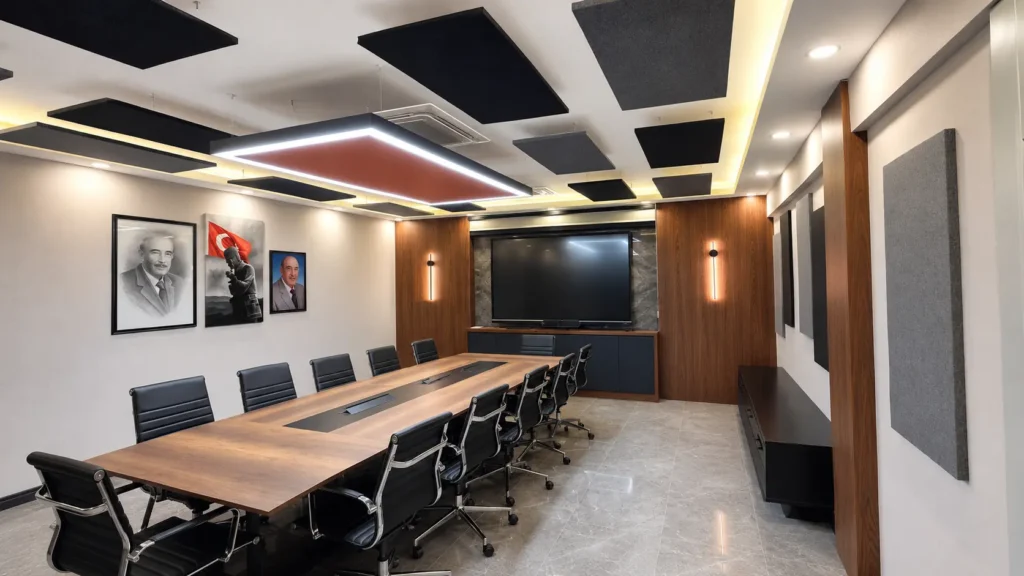
When sound from monitor speakers returns too early from wall and ceiling surfaces, stereo imaging becomes unstable and detail sounds blurred. By placing acoustic fabric panels and ceiling treatments at the correct points, early reflections are controlled, the stereo field becomes more stable, and dialogue plus fine details are heard more clearly.
Low-Frequency and External Noise Management
In small and medium-sized control rooms, low frequencies can accumulate in certain zones and create unwanted boom. With targeted acoustic planning, resonance is reduced and the bass response becomes more controlled. In addition, in projects where outside noise is an issue, sound insulation barriers help create a quieter interior that is more suitable for recording.
Application and Project Planning Process
We plan the acoustics of your control room end-to-end, from analysis to installation.
Needs Analysis
Room size, equipment layout, and current issues such as reflections, echo, boom, and outside noise are analyzed.
Acoustic Planning
Early reflection points, rear-wall behavior, and ceiling treatment are identified, then a layout plan is prepared according to the target.
Material Selection
Solutions such as acoustic fabric panels, ceiling panels, foam, curtains, and carpets are selected according to performance and visual goals.
Application & Installation
Installation is completed according to the treatment plan, with visual alignment and detail checks throughout the process.
Final Check & Delivery
Final controls are performed, the room’s acoustic comfort is evaluated, and the project is delivered.


What Should Be Considered in Control Room Acoustic Design?
Acoustic design in a control room is what allows the quality of the equipment to truly be heard. Controlling early reflections, managing low-frequency build-up, and reducing external noise are the core topics for accurate monitoring. Instead of random applications, solutions planned according to the room dimensions and layout produce the best outcome.
The Han Acoustic team designs panel and ceiling placement according to your control room plan and, when needed, adds insulation layers to create a quieter environment. Share your room photos and approximate dimensions, and we will quickly prepare a practical roadmap for you.
Frequently Asked Questions and Contact
We gathered the most common questions about control room acoustics. If you would like a fast quote for your project, fill out the form.
Why is acoustic treatment essential in a control room?
Because decisions are made based on what you hear. Uncontrolled reflections and low-frequency boom can mislead mix and editing decisions. Proper acoustic treatment provides a more reliable reference.
Are acoustic treatment and sound insulation the same thing?
No. Acoustic treatment manages echo and reflections inside the room. Sound insulation aims to reduce incoming external noise and prevent sound from leaking out. Depending on the project, both can be combined.
How can low-frequency boom be reduced?
Low frequencies tend to accumulate in certain room volumes. By identifying problematic zones and applying targeted acoustic planning, boom and resonance can be reduced.
Can an existing control room be improved without renovation?
In many cases, yes. Wall and ceiling panels plus targeted treatment can provide noticeable improvement with minimal intervention. The most efficient package becomes clear after discovery.
Which materials are used most often?
Acoustic fabric panels, acoustic ceiling panels, acoustic foams, acoustic curtains, and acoustic carpets can all be combined depending on the room’s needs.
New content, tips and practical guides.
Tips, guides, and application examples about acoustics and sound insulation.
Measured Acoustic Solution vs. Buying Panels From a Catalog: Which Actually Works?
Ordering acoustic panels online vs. a measured, engineered solution — compare diagnosis, quantity, frequency coverage, placement, and cost risk.
Read More →
“Reading an Acoustic Report: RT60, STC, NRC and STI Explained”
A plain-English decoder for acoustic consultant reports — what RT60, STC/Rw, IIC, NRC and STI mean, what's good, and what the numbers hide.
Read More →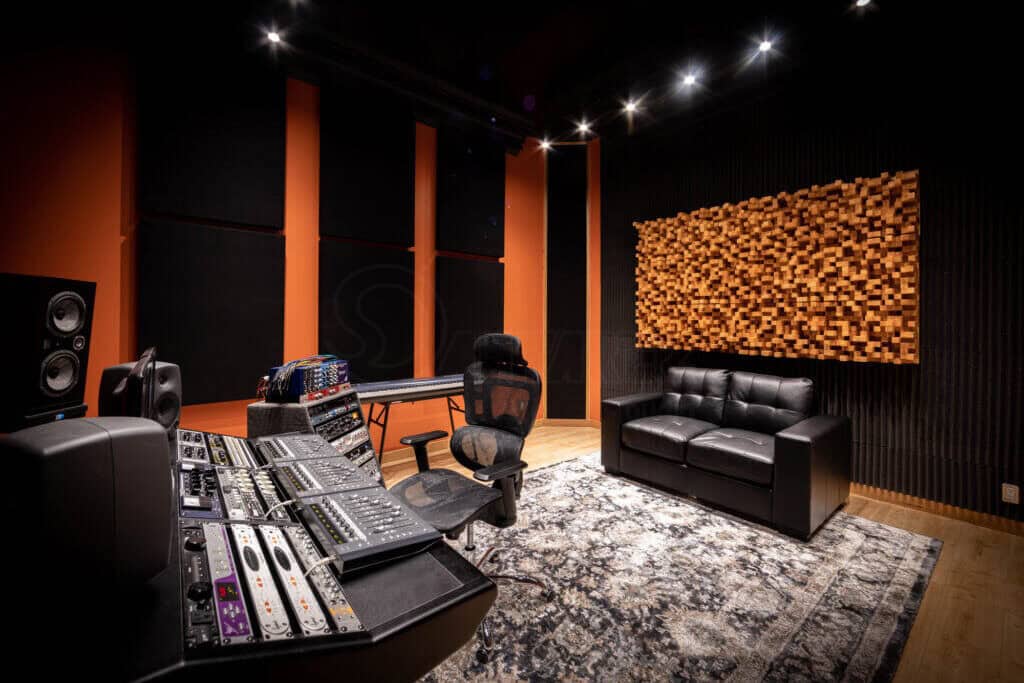
How Is an Acoustic Measurement Actually Performed? A Step-by-Step Guide
A field guide to acoustic measurement: equipment, RT60, background noise, airborne and impact insulation, and open-plan STI — step by step.
Read More →
“Noisy Hospital Wards: The Hidden Cost to Patients and Staff”
Hospital wards often run at 55–70 dBA against a WHO 30 dB night guideline. Here's why, what it costs patients and staff, and how…
Read More →
Hospital and Healthcare Acoustics: Why Sound Design Affects Recovery
WHO hospital noise guidelines vs. real ward levels, the impact on sleep and healing, and how healthcare acoustics balances hygiene with quiet.
Read More →
“Auditorium and Lecture Hall Acoustics: Designing for Every Seat”
Auditorium and lecture hall acoustics explained — the speech-vs-music RT tension, even coverage, echo control, STI targets, and design process.
Read More →