

Industrial Sound Insulation
Industrial sound insulation consists of specialized systems designed to control noise in areas where high sound levels occur, such as factories and production facilities. Sound emitted by machines, compressors, generators, and production lines can eventually trigger occupational safety risks, productivity loss, and hearing problems. With a project-specific engineering approach, Han Acoustic creates quieter, safer, and more efficient working environments.
What Is Industrial Sound Insulation?
Industrial sound insulation refers to professional applications that control the spread of noise in production areas by using solutions such as acoustic panels, barriers, and cabins / enclosure systems to reduce high sound levels. The goal is to improve employee comfort, support occupational health and safety requirements, and minimize the noise transmitted to adjacent spaces.
Core Features and Advantages
- High-Density Panels: An effective sound absorption and insulation approach.
- Filling Alternatives: Metal, glass wool, rock wool, or acoustic foam options.
- Noise Reduction: Depending on the project, performance targets of up to 60–80 dB may be planned.
- Vibration Isolation: Mechanical noise can be minimized with vibration-absorbing mounting systems.
- Fire Resistance: Fire-resistant, long-lasting, and low-maintenance solutions.
- Outdoor Compatibility: Resistance to outdoor conditions with galvanized sheet or aluminum cladding.
- Modular System: Easy installation/removal and flexible project management.
- OHS-Focused: Professional solutions that support occupational safety standards.
Application Areas
- Factories and Production Facilities
- Machine Rooms: Generator and compressor rooms
- Workshops: Metalworking and assembly areas
- Power Plants, industrial kitchens, and HVAC systems
- Test Booths, sound measurement rooms, and laboratories
- Warehouses and Logistics Centers
An Engineering Approach Against High Noise
In industrial environments, noise is not only a disturbing factor but also a direct risk parameter for occupational safety and productivity. For this reason, solutions should not be handled with a “single product” logic but within the integrity of noise source + transmission path + receiver point.
In applications such as factory sound insulation, generator room insulation, compressor cabin, acoustic barrier, and machine enclosure, ambient noise decreases noticeably when the right panel density, the right filling material, and the right installation detail come together.
Han Acoustic solutions are optimized according to site conditions with acoustic panels, industrial cabin systems, and barrier applications. Depending on the project, noise reduction targets in the range of 60–80 dB may be planned.
In mechanical systems, vibration is just as important as sound. For this reason, vibration-absorbing installation details play a critical role in reducing echo and vibration-related noise. A long-lasting investment is planned with fire-resistant, environmentally friendly, and VOC-free solutions.
Acoustic Performance: Sound + Echo + Vibration
Industrial sound insulation systems reduce noise by absorbing sound waves emitted by machinery. Depending on the project, sound reduction targets in the 60–80 dB range may be planned. With proper installation and vibration isolation, an approach supporting up to 85% reduction in echo and vibration levels can be targeted.
Health and Safety: OHS-Compliant Design
Systems configured to help reduce noise-related hearing loss are planned in line with occupational health and safety standards. They are produced with fire-resistant and environmentally friendly materials and contain no harmful chemicals or VOCs. The result: more comfortable teams and more sustainable production.
Survey, Design, and Application Process
Industrial sound insulation is not a “standard package” but a process planned according to the site and the noise source. With correct measurements and correct details, you reach the target performance more quickly and sustainably.
Site Survey & Noise Analysis
The noise source, sound propagation route, and critical points are identified.
Target Performance & Solution Configuration
Performance criteria such as a 60–80 dB target are defined; panel/barrier/cabin options are planned.
Material & Detail Selection
The filling type (rock wool / glass wool / acoustic foam), cladding (galvanized / aluminum), and vibration isolation are selected.
Production & Installation
With modular production, fast installation is carried out; a system offering removal when needed is installed.
Inspection & Delivery
Sealing, vibration, and performance checks are completed and the system is delivered according to site conditions.


Why Is Reducing Industrial Noise Critical?
Noise in production areas is directly related to employee health, occupational safety, and production quality. Proper insulation helps reduce noise while also helping control mechanical sounds caused by vibration. This supports teams working with better focus and processes progressing more stably.
Han Acoustic solutions target long-lasting on-site performance with cladding options suitable for indoor and outdoor conditions, fire-resistant construction, and modular configuration. To reach the most suitable solution for your project quickly, simply share your dimensions and application details.
Tell us about your project; let’s define the most suitable industrial solution together according to your dimensions, noise source, and target.
Frequently Asked Questions and Contact
We have compiled the most frequently asked questions about industrial sound insulation. Share your project details and let our expert team get back to you.
How effective is industrial sound insulation?
Depending on the type of material used and the application area, it can be configured to provide sound reduction in the 60–80 dB range.
Can the systems also be used outdoors?
Yes. Outdoor applications are possible with galvanized sheet, aluminum, or weather-resistant cladding options.
Does the insulation only reduce sound, or does it also prevent vibration?
With vibration-absorbing mounting systems, both sound and mechanically induced vibration noise are minimized.
Do you offer custom manufacturing or project-based solutions?
Yes. For each project, sound insulation panels, cabin systems, and barrier solutions can be produced specifically according to the dimensions and needs.
Does it require maintenance?
No. The materials used are long-lasting and require minimal maintenance.
New content, tips and practical guides.
Tips, guides, and application examples about acoustics and sound insulation.
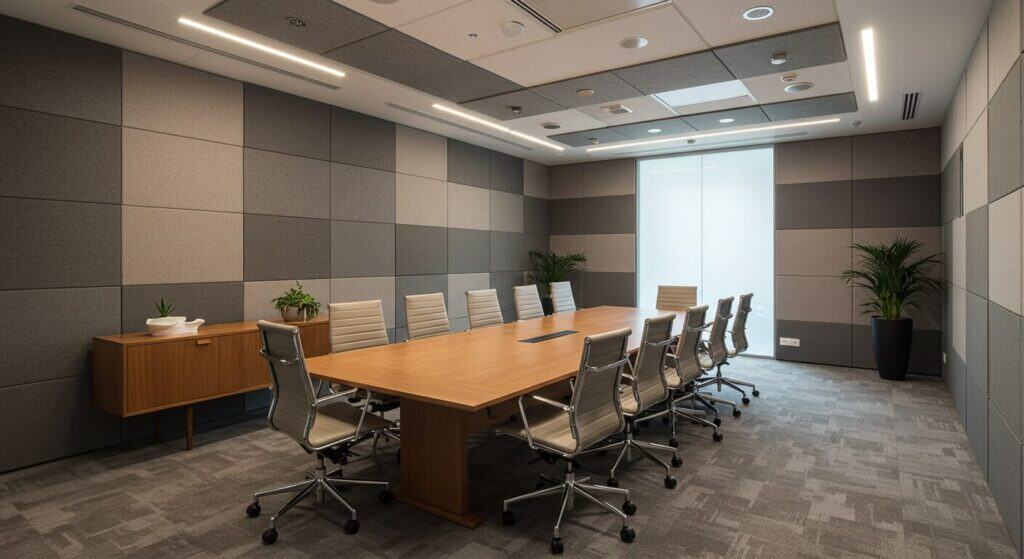
Most Commonly Used Acoustic Solution Types
Acoustic Fabric Panels Highly effective in speech clarity and mid-to-high frequency control. Acoustic Felt Panels Offers both aesthetic and practical application advantages; widely preferred…
Read More →
How to Choose the Right Solution for Your Space?
1) Clarify the need: “What’s the problem?” First, identify the problem correctly: Are conversations hard to understand? (echo/ringing) Is sound coming from the floor…
Read More →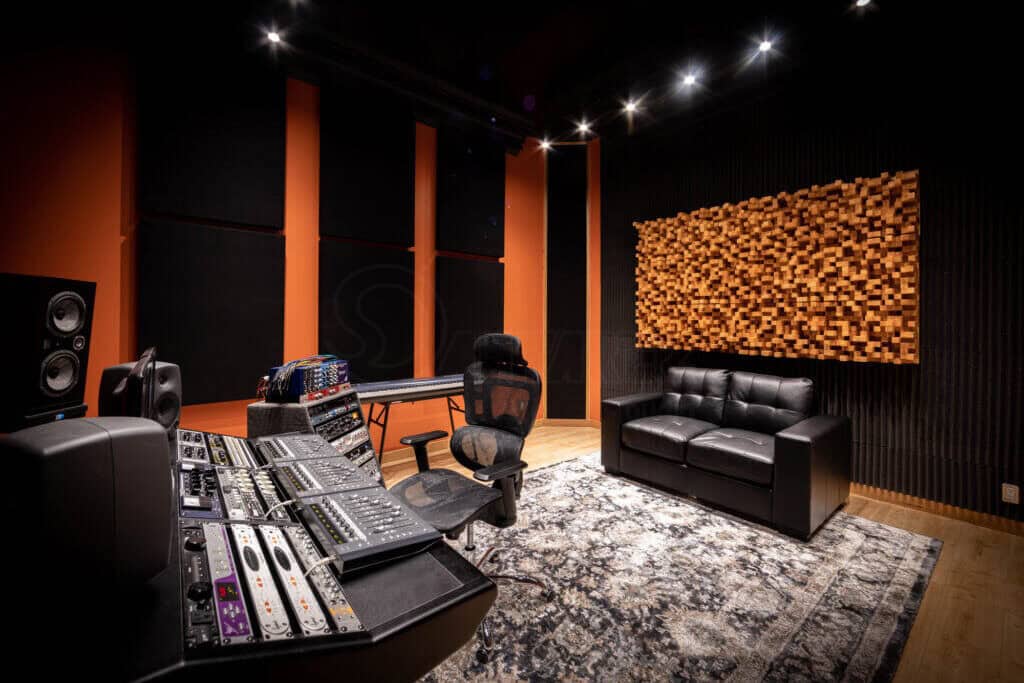
What Is Acoustic Design? How to Choose the Right Solution for Your Space?
When a space has a “sound problem,” most people look for a single solution: “Let’s install this and we’re done.” But in reality, good…
Read More →