

Wall Sound Insulation
Professional Solutions for Noise Control
Shared wall sound insulation is an effective acoustic solution designed to reduce noise coming from neighboring units in apartments, offices, or commercial spaces.
By combining sound-absorbing and insulating layers, the goal is to achieve both comfort and quietness in living and working areas.
The application is made to the existing wall with an overlay method; in full sound insulation, the wall may build out by about 12.5 cm,
and depending on the client’s request, it can be reduced to around 5.5 cm.
Depending on the material and application, an average sound insulation target of 35–40 dB can be achieved; when the recommended application is selected,
35 dB sound insulation is guaranteed by our company.
What Is Wall Sound Insulation?
Wall sound insulation is a layered isolation system applied to the wall to reduce the transmission of speech, TV/music, and general daily noise coming from neighboring walls into the interior space. A correctly designed structure weakens sound transmission through the wall and also helps create a calmer and more focused indoor atmosphere.
Core Features and Benefits
- High sound-absorbing and insulating panels for noise control.
- Minimizes external / neighbor noise and provides a quieter interior.
- Durable and long-lasting material use.
- Environmentally friendly and recyclable material approach.
- Professional application is required for reliable performance.
- Overlay method application; in full insulation, the wall may build out by about 12.5 cm, and depending on the requirement, it can be reduced to around 5.5 cm.
Application Areas
- Apartments and residential units
- Offices and commercial spaces
- Partition walls in hotels, cafés, and restaurants
- Interior wall applications in studios and educational spaces
Reduce Shared Wall Noise and Improve Living Comfort
The biggest issue with shared walls is sound leaking through the wall structure. That is why a successful application is based not only on thick material, but on the correct combination of sound absorption + sound barrier + vibration isolation layers. Han Acoustic optimizes the wall system according to project conditions to both control space loss and strengthen the insulation target.
The goal of shared wall sound insulation applications is to significantly reduce noise coming from neighboring units and to provide acoustic comfort indoors. Depending on the material and application, a sound insulation target of 35–40 dB can be achieved. Our applications are performance-committed; when the recommended solution is selected, 35 dB sound insulation is guaranteed by our company.
The application is made to the existing wall with an overlay method. In full sound insulation, the wall may build out by about 12.5 cm; depending on the client’s request, it can be reduced to around 5.5 cm. This allows the project to balance “maximum performance” and “minimum space loss” according to its priorities.
From a health and safety perspective, materials that are free from formaldehyde and VOCs, anti-allergic, and antibacterial are prioritized. With an environmentally friendly and sustainable production approach, a long-lasting solution is planned.
Materials Used: The Right Layers, Strong Results
The main components used in the wall sound insulation system are:
- High-density rebounded foam: Provides superior sound absorption performance.
- Heavy sound barrier (Mass Loaded Vinyl - MLV): Minimizes sound transfer between walls.
- Seismic sound tape: Helps reduce vibration- and impact-related transmission.
Acoustic Performance: 35–40 dB Target
Shared wall sound insulation significantly reduces noise coming from neighboring units. Depending on the material and application, an average sound insulation target of 35–40 dB can be achieved. Our applications are performance-committed; when the recommended solution is selected, 35 dB sound insulation is guaranteed by our company.
Survey, Project Planning, and Application Process
In wall sound insulation, performance starts with the right analysis, the right thickness selection, and the right installation detail. The system design is determined according to the type of neighboring noise, and the application is completed with a performance commitment.
Survey & Needs Analysis
The noise source such as speech, TV, or music and the target quietness level are clarified.
System & Thickness Planning
The layers are planned with the overlay method, and the target is set within the 12.5 cm ↔ 5.5 cm range.
Material Selection
Components such as rebounded foam, MLV barrier, and seismic sound tape are optimized according to project conditions.
Professional Installation
The layered system is applied, and details that reduce vibration and sound transmission are installed correctly.
Inspection & Handover
The application checks are completed and delivered in line with the 35 dB insulation commitment in the recommended solution.


Space Loss or Maximum Performance? Build the Right Balance
The most suitable shared wall insulation solution is determined by both the target insulation level and the space limitation. For maximum performance, a more comprehensive layered build-up can be planned with a 35–40 dB target. If you want to keep space loss to a minimum, the thickness can be optimized down to around 5.5 cm.
Han Acoustic designs the right system through a project-specific survey. Our applications are performance-committed; in the recommended solution, 35 dB sound insulation is guaranteed by our company. You only need to share your wall dimensions and the type of noise; the rest is planned by our expert team.
Share your wall dimensions and the type of neighboring noise, and let’s define the most suitable wall sound insulation solution together.
Frequently Asked Questions and Contact
We have compiled the most common questions about wall sound insulation. You can fill out the form for project-specific information.
How many dB can wall sound insulation reduce on average?
Depending on the material and application, an average 35–40 dB sound insulation target can be achieved. Our applications are performance-committed; when the recommended solution is selected, 35 dB sound insulation is guaranteed by our company.
How much thicker will the wall become? Will there be space loss?
The application is made to the existing wall with an overlay method. In full sound insulation, the wall may build out by about 12.5 cm; depending on the need, it can be reduced to around 5.5 cm.
Which materials are used?
The system is designed with layers such as high-density rebounded foam, MLV heavy sound barrier, and seismic sound tape. The material combination is optimized according to the project.
Is it suitable for neighbor speech and TV sounds?
Yes. It helps significantly reduce sound transmission from a shared wall against noise such as speech and TV/music. During the survey, the noise type is evaluated and the correct layer build-up is determined.
Are the materials safe for health?
Yes. The materials used contain no formaldehyde or VOCs; in addition, anti-allergic and antibacterial material options support indoor air quality.
New content, tips and practical guides.
Tips, guides, and application examples about acoustics and sound insulation.
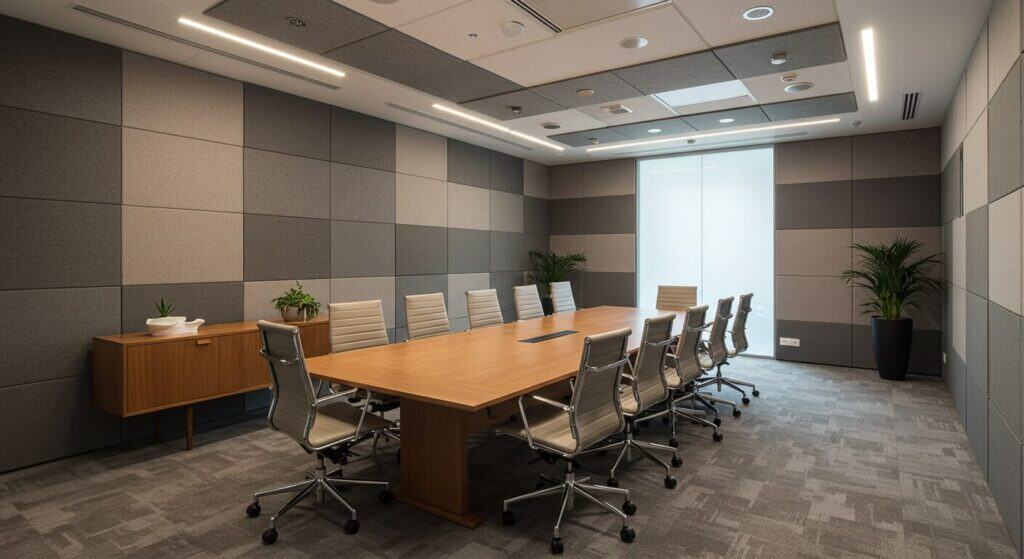
Most Commonly Used Acoustic Solution Types
Acoustic Fabric Panels Highly effective in speech clarity and mid-to-high frequency control. Acoustic Felt Panels Offers both aesthetic and practical application advantages; widely preferred…
Read More →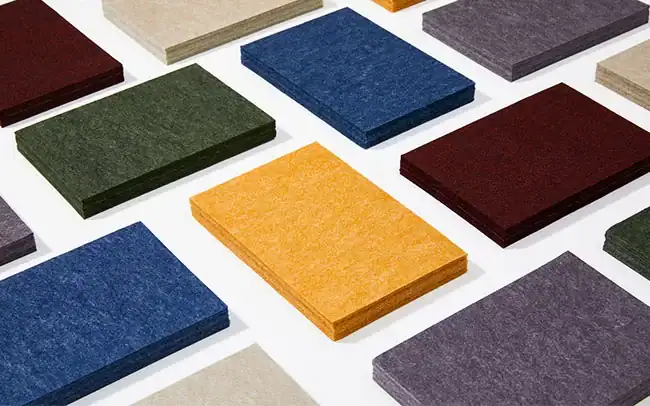
How to Choose the Right Solution for Your Space?
1) Clarify the need: “What’s the problem?” First, identify the problem correctly: Are conversations hard to understand? (echo/ringing) Is sound coming from the floor…
Read More →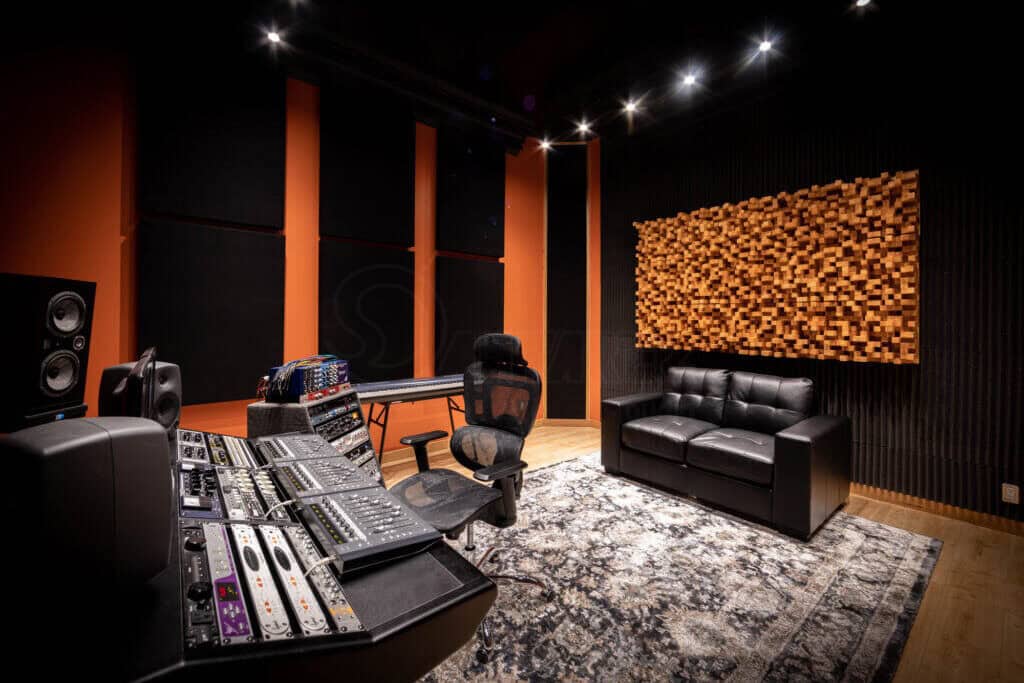
What Is Acoustic Design? How to Choose the Right Solution for Your Space?
When a space has a “sound problem,” most people look for a single solution: “Let’s install this and we’re done.” But in reality, good…
Read More →