
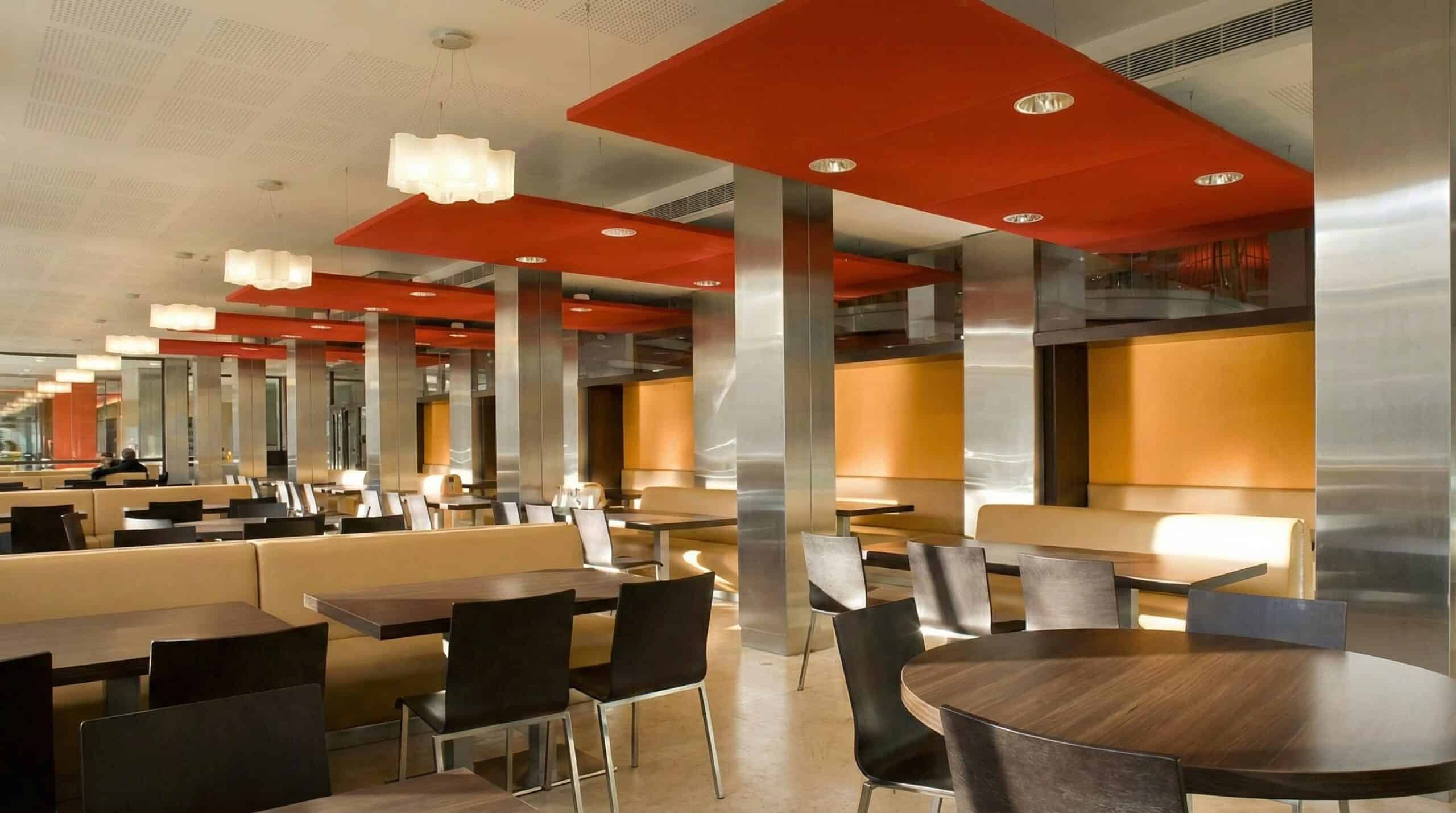
Floating Ceiling Acoustic Fabric Panels
Floating ceiling acoustic fabric panels are suspended system decorative solutions designed to reduce reverberation and improve speech clarity in spaces with high ceilings or limited wall surfaces. Panels are applied freely suspended from the ceiling; they absorb sound energy and help reduce ambient noise. With color, size, and design options, they offer a modern appearance from hotel lobbies to open offices, and from conference halls to restaurants and sports areas.
What Is a Floating Ceiling Acoustic Fabric Panel?
Floating ceiling acoustic fabric panel is an acoustic arrangement solution positioned freely with a suspension system at a certain distance from the ceiling surface, with sound-absorbing materials inside and an acoustic fabric covering on the outer surface.
Especially in high-ceiling volumes and large open spaces, it helps reduce echo/reverberation problems caused by hard surfaces. With correct placement and the right quantity, speech intelligibility increases and the space feels calmer.
What Are the Advantages?
- Echo Control: Helps reduce the feeling of hum/echo in large volumes and high ceilings.
- Freely Suspended Design: Adds a modern, minimalist aesthetic with a “floating” look on the ceiling.
- Flexible Size & Design: Can be adapted to the space with size, form, and color options according to the project.
- Compatible with Lighting: Stylish compositions can be created together with linear/spot lighting.
- Easy Installation: Fast installation with suspension fittings; can be repositioned if needed.
- Durable Solution: Long-lasting use is targeted in commercial areas.
Applications
- Offices & Open Offices: Hum control and a more productive working environment.
- Hotels: Acoustic comfort + decorative effect in lobbies and common areas.
- Restaurants & Cafes: Speech clarity and a calmer atmosphere.
- Conference Halls & Theaters: Improving room acoustics.
- Studios: Reducing echo in recording/shooting areas.
- Gyms & Hospitals: Reducing noise pressure in large spaces.
- Cinemas: More controlled and balanced sound distribution.
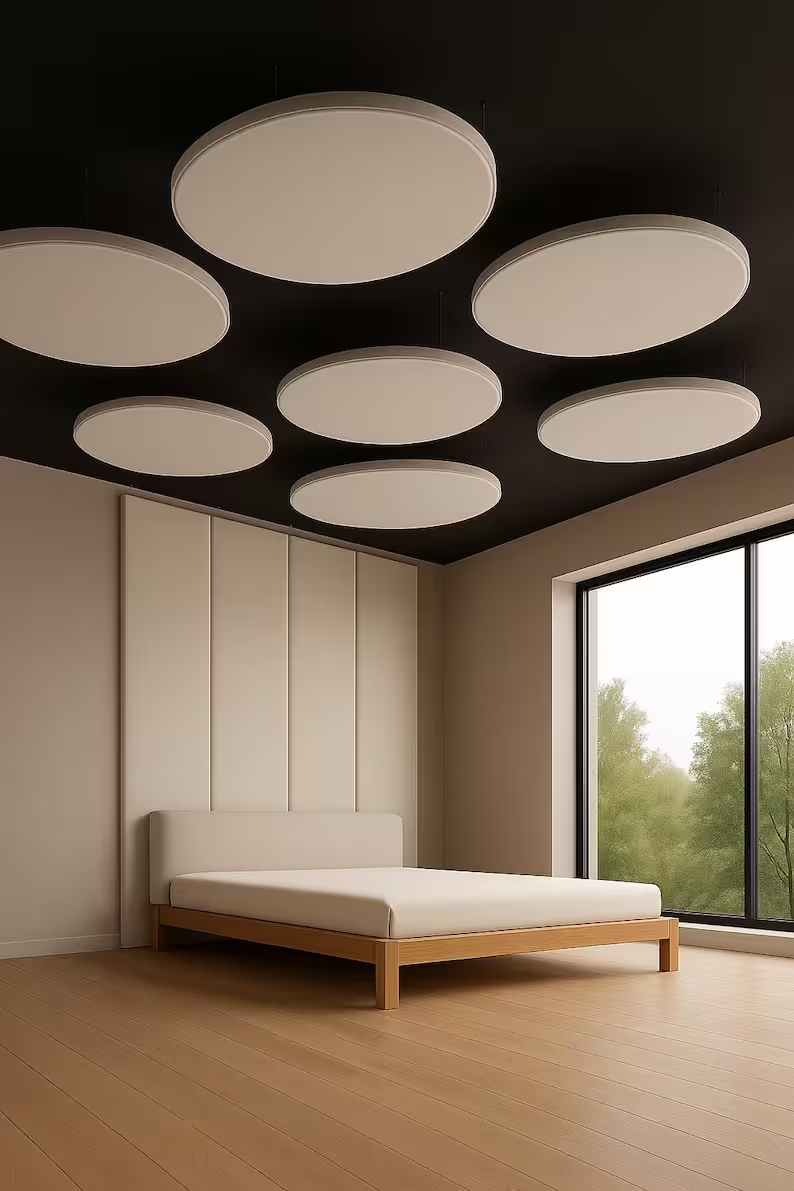
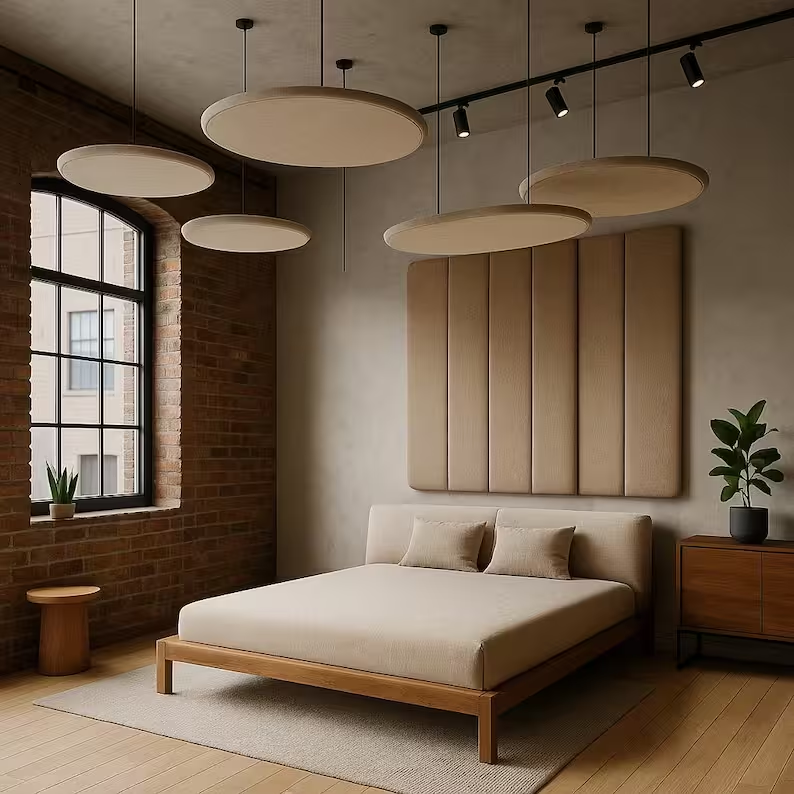
Acoustic Fabric Color Swatch
You can review the fabric swatch below to make it easier to choose the color suitable for your project.
What to Consider When Choosing a Floating Ceiling Acoustic Fabric Panel?
The most critical points for floating ceiling panels are the ceiling level, suspension distance, and the correct layout plan. It is not necessary to cover every surface with panels; in spaces where sound reflects intensely, target areas should be selected and the correct distribution should be designed.
FAQs and Contact
We have compiled the most common questions about floating ceiling acoustic fabric panels. If you have a specific question for your project, you can fill out the form.
What does a floating ceiling acoustic fabric panel do?
It helps reduce reverberation and ambient noise in large spaces by absorbing sound energy from the ceiling area and improving speech clarity.
Does it provide sound insulation, or does it reduce echo?
Floating ceiling acoustic fabric panels mainly help with echo control and acoustic comfort. Full sound insulation requires different system layers, but these panels significantly improve the acoustic quality of the space.
In which areas is it used?
They are frequently preferred in open offices, hotel lobbies, restaurants, conference halls, theaters, studios, gyms, hospitals, and large commercial interiors.
Are there size and color options?
Yes. Different sizes, forms, suspension details, and fabric colors can be planned according to the concept and acoustic needs of the project.
Is installation difficult?
Installation is planned according to ceiling height, carrier details, and layout. With the correct suspension equipment, the application process is practical and controlled.
How many panels should I buy?
The required quantity depends on the ceiling height, total area, usage type, and the reverberation target. Quick guidance can be provided when the project dimensions are shared.
How is cleaning and maintenance done?
Regular light dust cleaning is generally sufficient. Maintenance planning can vary depending on the selected fabric type and the application environment.
What determines the pricing?
The price varies according to panel size, quantity, fabric selection, suspension details, ceiling conditions, and installation scope. If you share your project details, a quick quote can be prepared.
New content, tips and practical guides.
Tips, guides, and application examples about acoustics and sound insulation.

“Auditorium and Lecture Hall Acoustics: Designing for Every Seat”
Auditorium and lecture hall acoustics explained — the speech-vs-music RT tension, even coverage, echo control, STI targets, and design process.
Read More →
When Students Can’t Hear the Teacher: Solving Classroom Noise
Why classroom noise stops students hearing the teacher, the mechanism behind it, and a prioritized, budget-realistic fix plan schools can use.
Read More →Classroom Acoustics Standards Explained: ANSI/ASA S12.60 and BB93
How ANSI/ASA S12.60 and BB93 set classroom noise, reverberation and insulation limits, why they exist, and how to check a room against them.
Read More →
“Guests Hearing the Room Next Door? How to Fix Hotel Sound Transfer”
Bad reviews about neighbour noise usually trace to one weak link, not the wall. How to diagnose the real transmission path and fix it…
Read More →
“Hotel Sound Insulation: What STC Rating Do Guest-Room Walls and Doors Need?”
The STC scale explained, the STC 50 code minimum for hotel guest rooms, why premium brands target STC 55-60, and the weak links that…
Read More →
Is Your Café Too Loud? Balancing Atmosphere, Comfort and Conversation
Why small, hard-surfaced cafés get fatiguing fast, and how targeted acoustic treatment keeps the buzz without the shouting. Data, table, fixes.
Read More →