

Acoustic Sound Insulated Glass
Acoustic sound insulated glass is a special glass system that helps reduce noise transmission without compromising transparency and aesthetics. Thanks to its laminated structure, argon gas-filled cavity, and triple-glazed configuration, it helps break sound waves and create a calmer interior environment. It is an ideal solution for acoustic comfort in office partition systems, meeting rooms, residential projects, hotels, and educational institutions.
What Is Acoustic Sound Insulated Glass?
Sound insulated glass systems are a special configuration formed by three glass layers,
a laminated interlayer, and an argon gas-filled cavity. This structure helps reduce sound transmission through the glass
and aims to create a more comfortable acoustic environment indoors.
Since it preserves transparency, it is especially preferred in glass partition and facade applications.
With the right thickness and configuration, both sound and thermal comfort can be planned together.
Core Features and Advantages
- Triple-Layer Structure: Triple glazing + laminated configuration targeting superior sound insulation.
- Argon Gas-Filled Cavity: Helps reduce heat and sound transfer.
- High Acoustic Performance: Depending on the project, target ranges of Rw 40–54 dB and STC 42–50.
- Transparent & Aesthetic: Offers a stylish and spacious appearance in modern architecture.
- Low-E Option: Optional coatings for solar control and thermal insulation.
- Safety & Durability: Security, fire resistance, and energy efficiency can be planned together.
- Custom Production: Can be adapted to the project with custom size, color, and thickness options.
Application Areas
- Office Partition Systems: Executive rooms, meeting spaces, and glass partitions.
- Meeting & Conference Areas: Aiming for privacy and speech clarity.
- Residential & Villa Projects: A solution that helps reduce the perception of external noise.
- Hotel Applications: Indoor comfort and a calmer atmosphere.
- Educational Institutions: Classrooms, libraries, and study areas.
- Studios & Commercial Buildings: Transparent applications requiring acoustic performance.
Maximum Quietness Target with a Triple-Layer Structure
The main factors determining performance in acoustic glass systems are the combined work of the number of glass layers, laminated interlayer, cavity space, and components such as argon gas. With the right combination, a structure can be created that helps reduce the perception of external noise indoors.
Acoustic sound insulated glass is a professional solution that helps minimize sound transmission in transparent partition and facade applications. Triple glazing, laminated interlayer, and argon gas filling aim to block a large portion of external noise by breaking sound waves.
Depending on the project, target values may be in the range of Rw 40–54 dB and STC 42–50. In addition, depending on the application configuration, an approach aiming to reduce reverberation, external noise, and sound transmission by up to 80% may be planned. (Actual results vary according to glass thicknesses, framing system, and installation details.)
Alongside acoustic performance, thermal insulation and solar control can also be planned together with optional Low-E coatings. This allows both comfort and energy efficiency goals to be combined in a single system.
Acoustic Performance: Measurable Results with Rw & STC
The triple-layer, argon gas-filled glass system helps reduce the perception of external noise indoors by breaking sound waves. As a project target, Rw 40–54 dB and STC 42–50 ranges may be planned. With the right configuration, an approach aiming to reduce sound transmission by up to 80% may be targeted.
Energy Efficiency: Argon + Low-E Option
Argon gas filling supports not only acoustic performance but also the goal of reducing heat transfer. With optional Low-E coatings, solar control and thermal insulation can be planned together. This way, comfort and energy efficiency can be targeted simultaneously in glass partition and facade applications.
Survey, Production, and Installation Process
Acoustic glass performance is created not only by the glass itself but also together with the framing system, gaskets / sealing, and installation details. We move the process forward quickly and clearly according to project needs.
Needs Analysis
The noise source, application area (office/residential/meeting/hotel), and target performance (Rw/STC) are defined.
Dimensions & System Selection
Glass thicknesses, laminated structure, argon filling, and optional Low-E selection are planned according to project requirements.
Production
Project-based production is prepared with custom size, color, and thickness options.
Installation
Sealing details are applied with the correct framing / gasket configuration; the performance target is supported.
Inspection & Delivery
Closure, sealing, and user comfort are checked before delivery.


What Should You Consider When Choosing Acoustic Glass?
The most critical factor in acoustic glass selection is planning the targeted Rw/STC value together with the correct framing system and sealing details. No matter how good the glass is, gaps and leaks reduce performance.
In addition, if energy efficiency is also required, argon filling and optional Low-E coating should be evaluated together. According to project requirements, the most suitable configuration can be determined with custom size, thickness, and color options.
Share the area dimensions and noise source so we can define the glass configuration together according to the target acoustic value.
Frequently Asked Questions and Contact
We have compiled the most important questions about acoustic sound insulated glass. If you share measurements or plans for your project, we can guide you quickly.
How much noise can a triple-glazed sound insulated system reduce?
Depending on the glass thicknesses and configuration used, sound reduction performance in the range of Rw 40–54 dB may be targeted. Actual results vary according to framing and installation details.
What is the advantage of argon gas?
Argon gas helps reduce sound and heat transmission, supporting both energy efficiency and acoustic performance targets.
What is the difference between STC and Rw?
Both are measurements expressing sound insulation performance; the preferred one depends on the project and the applicable standards. In these systems, target ranges can generally be planned as STC 42–50 and Rw 40–54 dB.
Is a Low-E coating required, and what does it do?
It is not mandatory. However, a Low-E coating is an option that helps improve comfort in projects targeting thermal insulation and solar control.
Can the glass be produced in custom sizes?
Yes. Custom size, thickness, and color options can be offered according to project requirements.
New content, tips and practical guides.
Tips, guides, and application examples about acoustics and sound insulation.
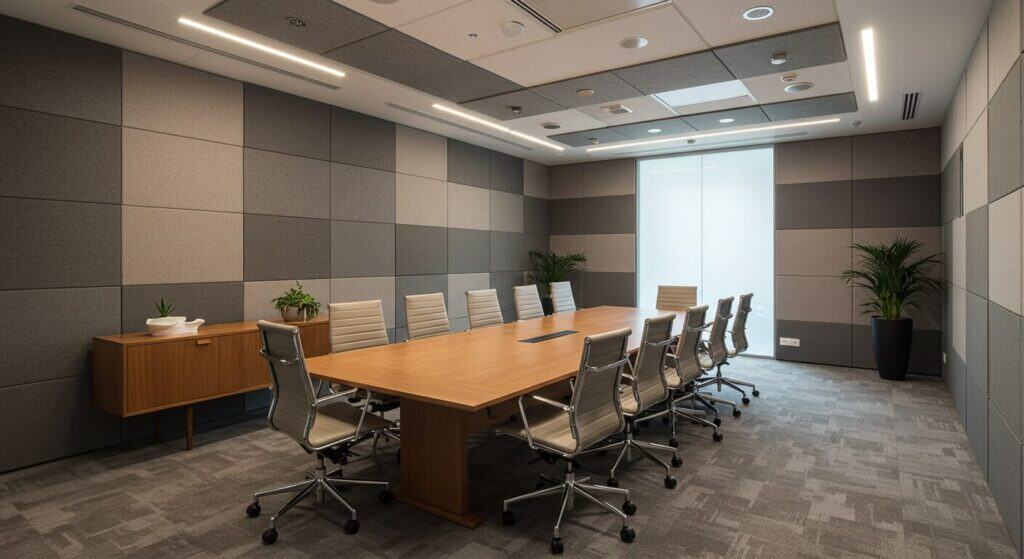
Most Commonly Used Acoustic Solution Types
Acoustic Fabric Panels Highly effective in speech clarity and mid-to-high frequency control. Acoustic Felt Panels Offers both aesthetic and practical application advantages; widely preferred…
Read More →
How to Choose the Right Solution for Your Space?
1) Clarify the need: “What’s the problem?” First, identify the problem correctly: Are conversations hard to understand? (echo/ringing) Is sound coming from the floor…
Read More →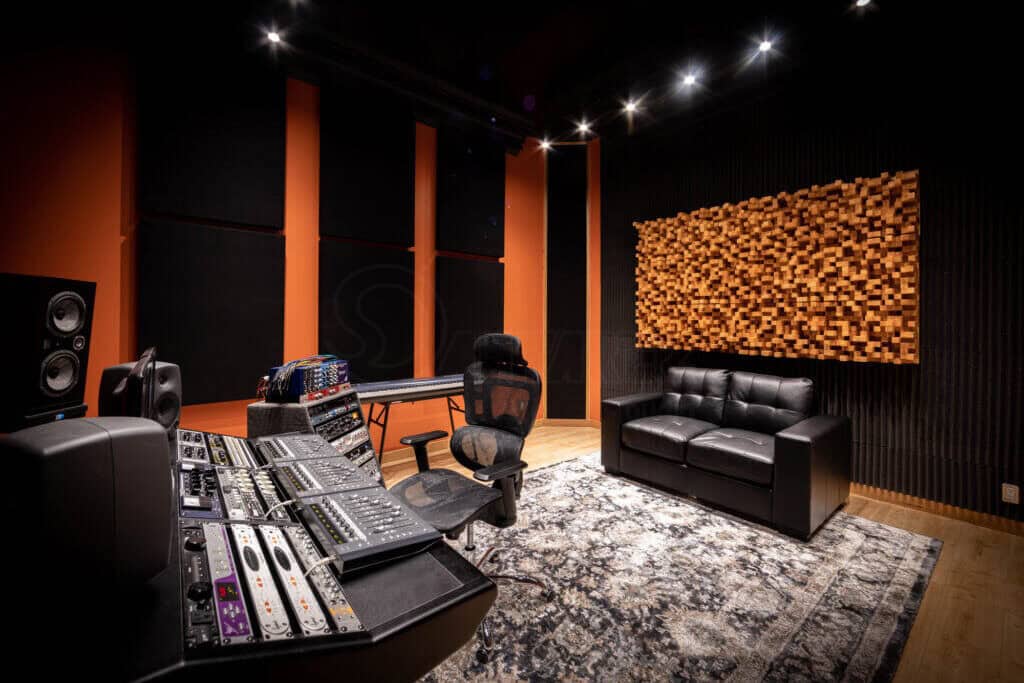
What Is Acoustic Design? How to Choose the Right Solution for Your Space?
When a space has a “sound problem,” most people look for a single solution: “Let’s install this and we’re done.” But in reality, good…
Read More →