

Acoustic Phone Booth
Acoustic phone booths are specially designed sound-insulated cabins created to provide privacy, comfort, and quietness in open offices and shared workspaces. They offer an ideal solution for phone calls, online meetings, and short individual work sessions. Thanks to their high sound-absorbing performance, they aim to reduce distractions and increase productivity.
What Is an Acoustic Phone Booth?
An acoustic phone booth is a compact “quiet space” solution designed to make conversations more controlled within the office and help reduce outside noise during short meetings,
reinforced with sound-absorbing materials.
It aims to allow more comfortable conversations without disrupting the workflow. It is especially helpful in open offices by reducing the overlap of conversations.
Key Features and Advantages
- High Sound Insulation: Interior structure supported with acoustic felt and sound-absorbing panels.
- Privacy-Focused: Helps reduce sound leakage outward while creating a comfortable conversation area inside.
- Comfort Details: Comfortable use with integrated ventilation and lighting systems.
- Power + USB: Suitable infrastructure and practical use for devices.
- Modern Design: Elegant appearance with an ergonomic form that fits office architecture.
- Easy Installation: Modular structure with practical assembly and a relocatable usage scenario.
Areas of Use
- Open Office & Shared Workspace: Quiet area for phone calls and online meetings.
- Call Centers: More controlled environment that may help improve conversation clarity.
- Educational Institutions: Short meetings and individual focus areas.
- Libraries: Controlled conversation point in quiet work areas.
- Trade Fairs / Events: Practical solution in temporary meeting and demo areas.
Acoustic Comfort for Modern Workspaces
In open offices, noise is one of the biggest factors that makes focus difficult. Acoustic phone booths aim to quickly create a “quiet area,” improve conversation comfort, and reduce distractions for the people around them.
Acoustic phone booth solutions create a separate area within the office for phone calls, online meetings, and short individual tasks. The interior design optimized with sound-absorbing materials may help reduce the feeling of echo and support speech clarity.
On the acoustic performance side, the goal is to significantly reduce external noise through the right materials and the right internal setup. In this way, more comfortable conversations can be held inside the booth, while sound leakage to the outside is minimized as much as possible.
Comfort details such as ventilation, lighting, and power/USB make a real difference in daily use. In addition, thanks to the modular structure, the installation process is practical, and relocation can be carried out when needed.
Acoustic Performance: Clear Conversation Feel
Acoustic phone booths are designed to help reduce ambient noise. Depending on the project setup, an average sound reduction target of 30–35 dB may be aimed for; the goal is for external noise to be felt less and for speech clarity to improve.
Comfort: Ventilation, Lighting, Power
The most important details that define comfort during long conversations inside the booth are integrated ventilation, proper lighting, and power/USB infrastructure. These components turn the booth from a simple cabin into a truly productive work tool.
Installation and Project Planning Process
To achieve the best result, the booth location, usage intensity, and office plan are evaluated together. We move the process forward clearly and quickly.
Needs Analysis
The usage purpose (phone / online meeting / focus) and daily usage intensity are determined.
Layout Plan
A location that does not disrupt office flow, is easy to access, and works efficiently is proposed.
Equipment Selection
Ventilation, lighting, power/USB, and interior layout needs such as seating or shelves are clarified according to the project.
Installation
Thanks to the modular structure, installation is completed quickly and the usage scenario is checked.
Delivery & Use
Ventilation, lighting, and power infrastructure are tested, and user guidance is provided.


What Should You Consider When Choosing an Acoustic Phone Booth?
The right booth selection should be evaluated not only in terms of “sound” but also together with comfort and workflow. Ventilation capacity, lighting comfort, and power/USB infrastructure allow the booth to be used efficiently throughout the day.
In addition, booth placement is very important: positioning it too close to a heavy traffic route may reduce the targeted sense of quietness. For the best efficiency, a point suitable for the office plan should be selected.
Send the office plan or a photo of the space, and we can determine the most suitable booth layout and model together.
Frequently Asked Questions and Contact
We have gathered the most important questions about acoustic phone booths. If you share your measurements or plan for the project, we can guide you quickly.
How much noise can an acoustic phone booth reduce?
Depending on the acoustic materials and interior setup, it may help significantly reduce the perception of external noise. As a project target, sound reduction values in the average range of 30–35 dB may be aimed for; results vary according to office conditions.
Is installation difficult? Can it be moved?
No. Thanks to its modular structure, it can be assembled practically and can be planned in a way that allows relocation when needed.
How is air circulation provided inside?
The booths include an integrated ventilation system, with continuous fresh air flow being targeted. This makes conversations more comfortable.
Are power and USB connections available?
Yes. Suitable infrastructure is provided with power and USB connection points for device use, offering convenience during online meetings and phone calls.
Can the interior equipment be customized?
Yes. Seating layout, lighting, color options, and connection points can be customized according to project needs.
New content, tips and practical guides.
Tips, guides, and application examples about acoustics and sound insulation.
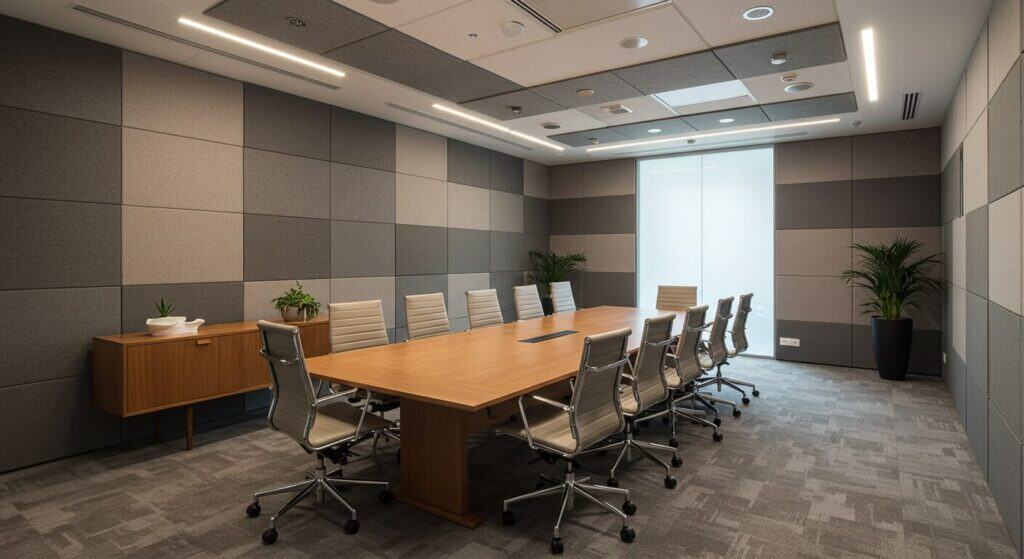
Most Commonly Used Acoustic Solution Types
Acoustic Fabric Panels Highly effective in speech clarity and mid-to-high frequency control. Acoustic Felt Panels Offers both aesthetic and practical application advantages; widely preferred…
Read More →
How to Choose the Right Solution for Your Space?
1) Clarify the need: “What’s the problem?” First, identify the problem correctly: Are conversations hard to understand? (echo/ringing) Is sound coming from the floor…
Read More →
What Is Acoustic Design? How to Choose the Right Solution for Your Space?
When a space has a “sound problem,” most people look for a single solution: “Let’s install this and we’re done.” But in reality, good…
Read More →