

Restaurant Acoustics
Restaurant acoustics is the complete process of creating a sound environment where guests can talk comfortably, music adds enjoyment without becoming disturbing, and perceived background noise remains under control even during busy hours. Hard floors, glass surfaces, and high ceilings can increase reverberation and reduce comfort. Han Acoustic brings the sound comfort of your restaurant to a premium level with acoustic panels, ceiling solutions, and complementary applications.
What Is Restaurant Acoustics?
Restaurant acoustics improves speech intelligibility by managing reverberation and reflections inside the venue. As occupancy increases, conversations overlap; the environment starts to feel like continuous noise, and guests often need to raise their voices. Proper acoustic treatment shortens reverberation time, reduces perceived noise, and creates a more comfortable dining experience.
What Does It Add to the Business?
- Conversation Comfort: Guests can talk without shouting and enjoy more peaceful table communication.
- Lower Perceived Noise: During busy hours, noise buildup drops and the venue feels higher quality.
- Balanced Music: Music adds value in the background while harshness is reduced.
- Longer Stay Duration: As comfort rises, guest satisfaction and repeat-visit potential increase.
- Staff Comfort: Noise fatigue drops throughout the day and communication becomes easier.
- Concept Compatibility: Project-specific acoustic solutions are applied without sacrificing aesthetics.
Application Areas
- Fine Dining: Reverberation control for a quiet and refined atmosphere.
- Cafe & Bistro: Noise buildup reduction during busy hours.
- Food Courts / Open Volumes: Ceiling-focused acoustic improvement in large spaces.
- Hotel Restaurants: A premium experience through comfortable sound conditions.
- Live Music Venues: Clarity in the stage zone and comfort in the seating area.
A Peaceful Atmosphere Even During Busy Hours: Control the Noise Buildup
The most common complaint in restaurants is increasing noise and the feeling of background buildup as the venue gets crowded. The main reason is sound remaining in the space for too long on hard surfaces. The goal of acoustic treatment is to reduce reflections without lowering the overall energy of the venue, making speech much easier to understand. Han Acoustic plans the right combination according to your square meter size, ceiling height, surface materials, and concept.
Restaurant acoustics is one of the most critical comfort topics that directly affects guest satisfaction. Proper acoustic applications reduce reverberation, lower perceived noise, and improve speech intelligibility. As a result, your restaurant gains a calmer, more premium, and more inviting atmosphere.
Depending on the project, acoustic fabric panels, acoustic ceiling panels, sound-absorbing surfaces, acoustic curtains, and acoustic carpets can be planned together. In large volumes, ceiling-focused solutions significantly reduce background noise during busy hours.
Share the venue details such as square meter size, ceiling height, concept, and operating density, and we will quickly identify the right solution through a fast preliminary evaluation.
Managing Reverberation and Noise Buildup
As the crowd increases, ambient noise rises, and if reverberation time is long, this noise feels multiplied. With targeted acoustic applications on ceilings and walls, reflections are shortened and the venue sounds calmer.
Aesthetic Solutions Aligned with the Concept
In restaurants, acoustic treatment should create invisible comfort. With project-based planning, effective results are achieved on the right surfaces with the right products without harming the identity of the venue.
Restaurant Acoustics Application Process
We analyze the venue, determine the right solution combination, and complete the application professionally.
Needs Analysis
Square meter size, ceiling height, concept, busy hours, and existing issues such as noise buildup, reverberation, or music balance are evaluated.
Acoustic Planning
Ceiling and wall reflection zones are identified, and a layout plan is created for speech intelligibility and comfort.
Material & Combination Selection
Acoustic panels, ceiling applications, and complementary solutions such as curtains, carpets, and foams are configured according to project needs.
Application
Applications are carried out in critical zones, targeting both aesthetics and acoustic performance.
Final Check & Delivery
Placement checks are completed and the venue is delivered with the goal of a comfortable and premium sound atmosphere.
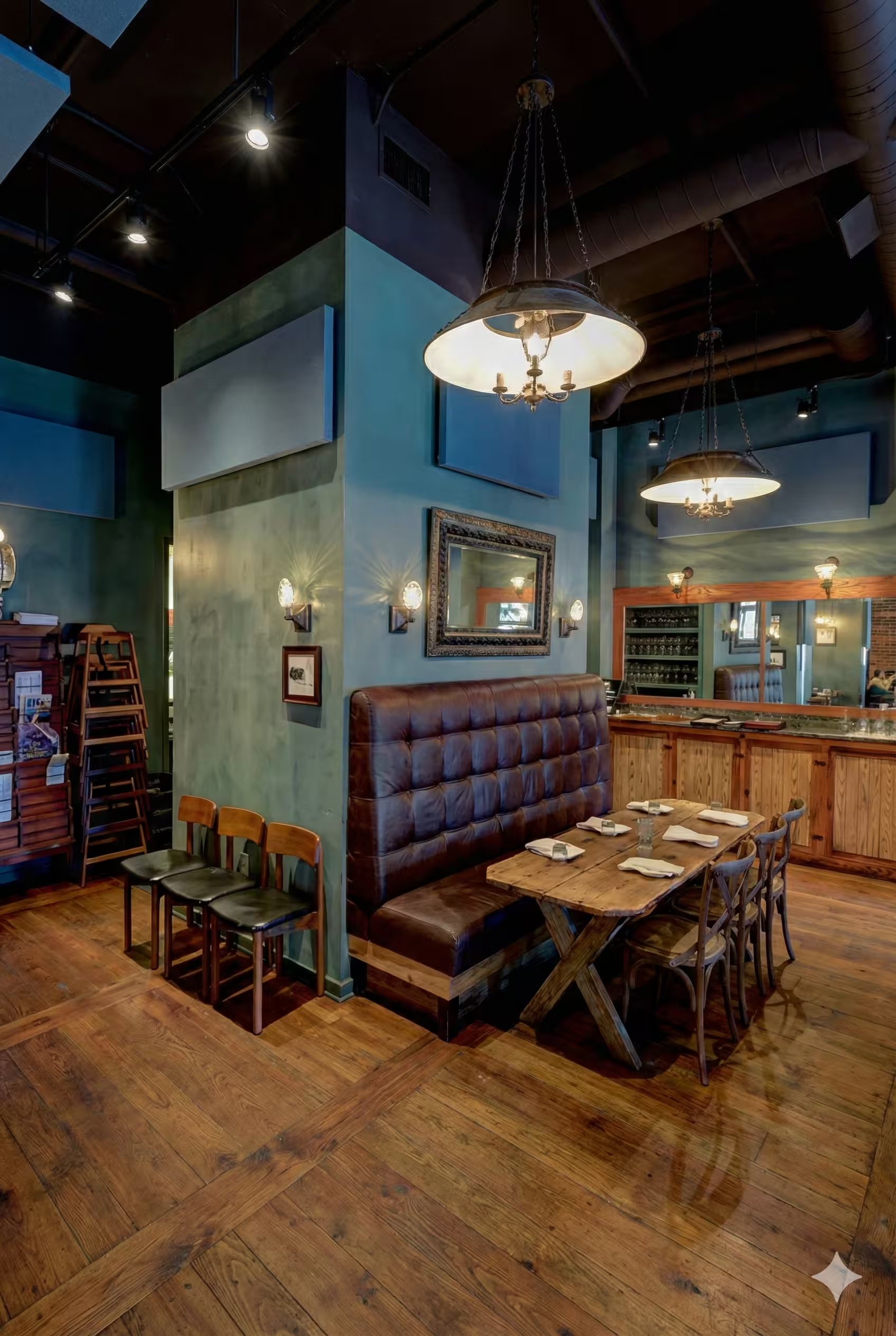
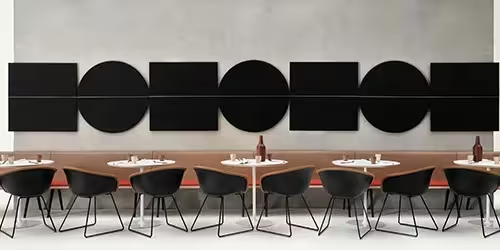
What Should Be Considered When Planning Acoustics in a Restaurant?
The aim in restaurant acoustics is to create an environment where guests can talk without raising their voices. The density of hard surfaces such as glass, concrete, and ceramic, along with ceiling height and seating layout, directly affects reverberation. For this reason, ceiling and wall treatments should be targeted, and busy operating hours must be included in the plan.
Han Acoustic offers solutions that reduce reverberation and lower perceived noise without compromising the concept of your restaurant. When needed, the system can be completed with sound insulation solutions to reduce sound transfer to neighboring areas.
Share your venue dimensions and concept, and we will quickly identify the right solution combination.
Frequently Asked Questions and Contact
We gathered the most common questions about restaurant acoustics. If you have a specific question for your project, you can fill out the form.
Why does noise buildup happen in restaurants?
Hard surfaces and high ceilings cause sound to stay in the venue for a long time. As the crowd grows, conversations overlap and perceived noise increases. Acoustic treatment reduces this effect by shortening reverberation time.
Does restaurant acoustics affect customer satisfaction?
Yes. A comfortable sound environment means more enjoyable conversation, longer stays, and a higher chance of repeat visits. Good acoustics also strengthen the premium perception of the venue.
Where do we get the fastest impact: ceiling or walls?
In many restaurants, the ceiling delivers quick and effective results because it is such a large surface. However, the ideal solution combines ceiling treatment with critical wall zones.
Which materials are used?
Depending on the project, acoustic fabric panels, acoustic ceiling panels, acoustic foams, acoustic curtains, and acoustic carpets can be configured together.
Will acoustic treatment ruin the decoration?
No. With project-based design, solutions that match your concept are selected. The goal is to create invisible comfort.
New content, tips and practical guides.
Tips, guides, and application examples about acoustics and sound insulation.
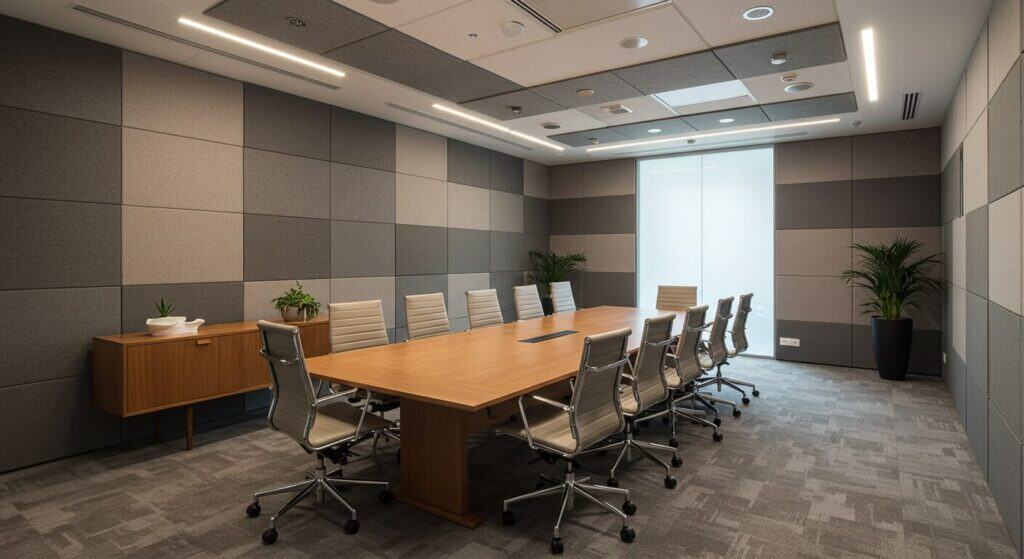
Most Commonly Used Acoustic Solution Types
Acoustic Fabric Panels Highly effective in speech clarity and mid-to-high frequency control. Acoustic Felt Panels Offers both aesthetic and practical application advantages; widely preferred…
Read More →
How to Choose the Right Solution for Your Space?
1) Clarify the need: “What’s the problem?” First, identify the problem correctly: Are conversations hard to understand? (echo/ringing) Is sound coming from the floor…
Read More →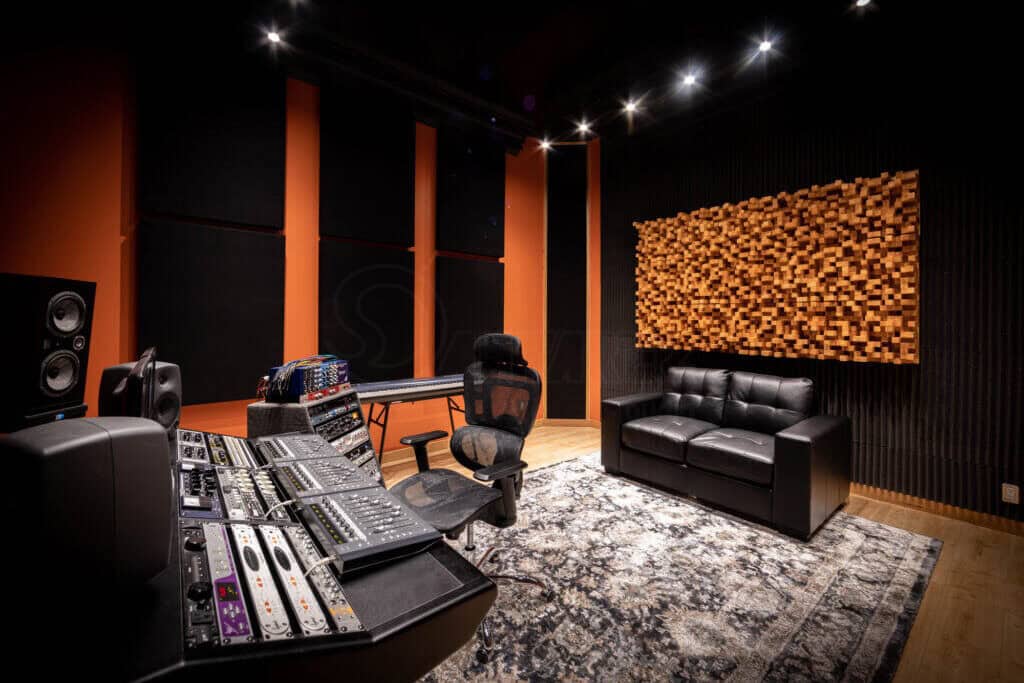
What Is Acoustic Design? How to Choose the Right Solution for Your Space?
When a space has a “sound problem,” most people look for a single solution: “Let’s install this and we’re done.” But in reality, good…
Read More →